

It’s the time of year when many farms start to look for extra helping hands during the busy spring and summer seasons.
But the ongoing chronic labour shortage across the agriculture sector is making it increasingly difficult to find employees — and there are no signs that this deficit will let up any time soon.
The undersupply is aggravated by a lack of public transit, relatively low wages, a decreasing birth rate and an out-migration of youth from rural areas.
With a high rate of unemployment among those under 35, youth could help close the labour gap, but University of Guelph human resources professor Nita Chhinzer says there is a mismatch between their perception of agriculture and reality. She explains that this segment of the workforce isn’t enthused about manual labour and may shy away from jobs in agriculture believing that it’s only about physical work.
Read Also
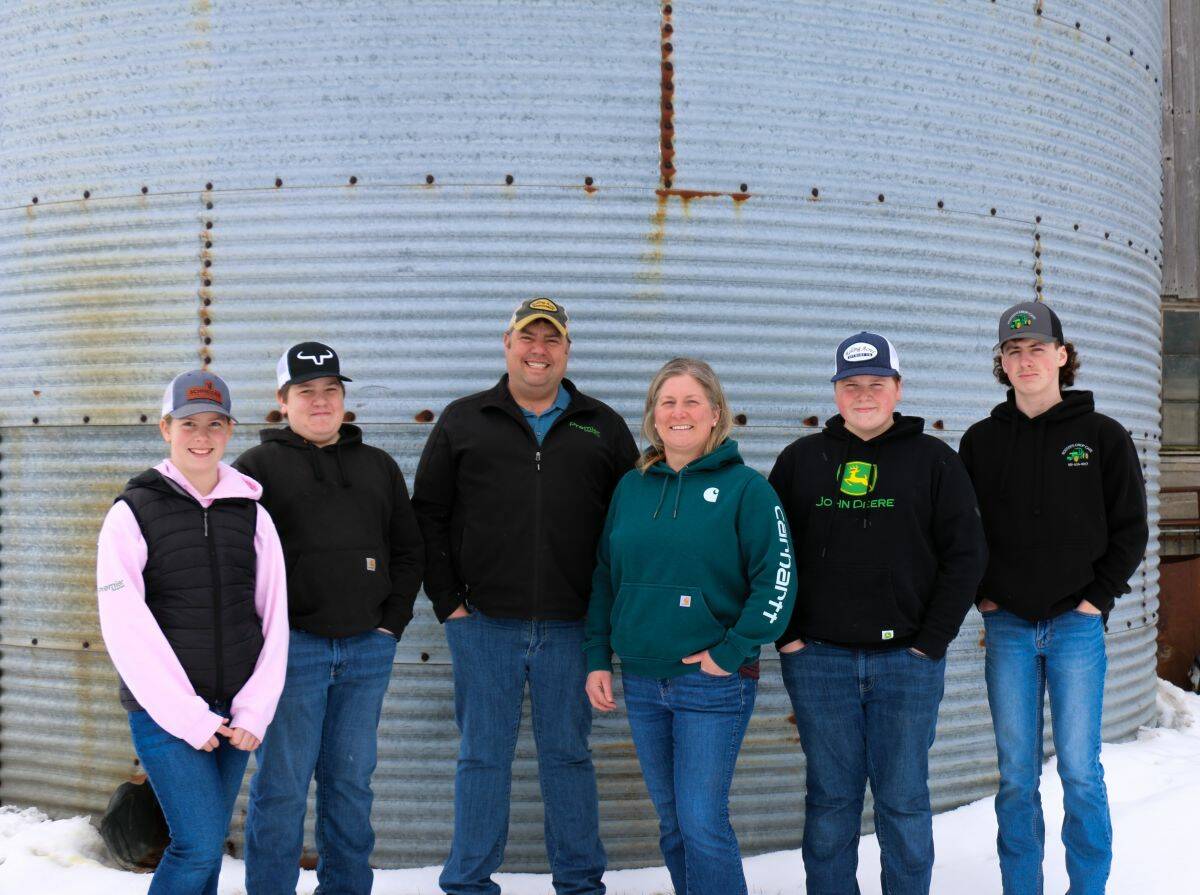
Trust, teamwork and lessons in resilience
When a string of misfortunes hit this Ontario farm, trust, teamwork and quick lessons in resilience got them through.
A move towards automation and mechanization in agriculture has helped to offset the labour shortage but Phyllis MacCallum, a program manager at the non-profit Canadian Agricultural Human Resource Council (CAHRC), says this is only part of the solution. New technology creates a need for new skill sets which require up-skilling and re-skilling the current workforce and attracting people with entirely new skill sets to the sector.
She also acknowledges that some farms are unable to harness new technologies due to a lack of high-speed internet in some rural areas.
A lack of rural services also poses additional challenges for potential farm employees. “When young families are considering rural jobs they ask about houses, education, child care and medical services and these amenities are often lacking or non-existent,” explains MacCallum. In response, Chhinzer points out that some communities have formed coalitions to become “welcoming communities” that consider the whole package of a family’s needs.
However, advancements in technology are making agriculture attractive to several workers from other sectors, says MacCallum. By raising awareness of the prevalence of tech, automation, digitalization and AI used in agriculture, farms can draw from a larger pool of potential employees.
Her advice for the industry is to rebrand, to change the narrative and show the young demographic that agriculture can offer high-tech, environment-friendly and meaningful careers where you can build lasting friendships.
Generating interest among non-farmers
CAHRC’s Student Work Placement Program (SWPP) can make it easier for students from non-farm backgrounds to gain agricultural experience. “Closely connected to co-op programs, SWPP provides students with the opportunity to explore different career pathways and encourages employers to hire young people in their operations,” says MacCallum. She adds that many provinces also have funding to pay for training and onboarding new employees.
Another way youth from non-farm backgrounds are learning about jobs on today’s farms is through Agriculture in the Classroom (AITC). While the main focus of AITC is on ag literacy, executive director Denise Schmidt says this national charitable organization also aims to highlight careers in the diverse agri-food system.
In-class workshops and career fairs organized through AITC members in each province and territory show students the breadth of jobs across sectors while also demonstrating the kinds of skill sets that will be needed whether it’s software, accounting or equipment.
In the past few years, AITC has also focused on informing school guidance counsellors of the opportunities available in agriculture.
While AITC isn’t involved in recruitment directly, Schmidt says they are always looking for volunteers to talk to students in schools and at career fairs to showcase careers in agriculture. “Our members across Canada are the storytellers and message holders,” she says.
Schmidt sees opportunities for the farm community to think outside the box when it comes to hiring. She explains that with Canada’s diverse immigration, many students are from cultures that have strong connections to agriculture. “How do we embrace that? What skill sets are those individuals bringing to our country that we can be utilizing?”
Pipelines of talent
ACCES Employment, a not-for-profit workforce planning organization, has developed a program to help employers in the fast-growing vertical farming sector meet their labour needs.
The Connecting to Careers in Agricultural Technology within Vertical Farming program helps jobseekers, many of whom are newcomers to Canada, obtain valuable Canadian experience and references. “And employers benefit from the expertise of internationally trained clients, who bring various perspectives and agricultural skills from abroad,” says Sue Sadler, senior vice-president of services and program innovation.
The program builds a pipeline of talent with relevant, hands-on skills that benefit both employers and job seekers, says Sadler, noting that employers have responded positively. “It’s a two-way win,” she says.
The 16-week, instructor-led program combines virtual learning with hands-on experiential learning at vertical farms. Graduates earn five Humber Polytechnic micro-credentials aligned with key industry roles.
To date, 120 clients have completed the program, with 60 securing employment or moving into improved roles. The program is delivered in partnership with Humber Polytechnic and CAHRC with funding from Upskill Canada (powered by Palette Skills) and the Government of Canada.
Sadler adds that the program can also support talent mobility, helping newcomers explore career opportunities outside their initial landing cities, including rural communities facing labour shortages.
In addition to the technical component, participants also receive industry mentoring and education that build essential communication, critical thinking and growth-mindset skills that are valued by employers.
While the focus of the program is on learning skills to work in vertical farming, Sadler adds that many competencies are transferable across controlled environment farming and related agri-tech roles.
Leverage transferable skills
MacCallum says several cross-sectoral skills are in demand in agriculture, so look for transferable skills from other industries. “How can one set of skills be used across different sectors and how do skills from other industries apply to agriculture?”
Having a highly qualified person in your farm’s HR role will make it easier to find potential employees from other sectors and through non-traditional channels. Chhinzer recommends hiring someone who is tech savvy and knowledgeable in employment law. And a good HR professional will go where the youth are, for example, on social media or at associations, colleges and universities — not LinkedIn or Indeed. “They can make sure you are casting a wide net and avoid biases such as selecting on Anglo names only.”
Alternatively, if you have a good employee who lacks the necessary HR expertise, she recommends getting them the necessary training, such as micro-credentials in employment law.
One source for upgrading HR skills is a new program at the University of Guelph’s School of Continuing Studies (SCS), developed in collaboration with CAHRC. Designed to deliver practical, industry-informed HR training, the Certificate in People Management has an elective stream for agriculture and rural enterprises.
According to the university, learners gain essential HR knowledge for their business through a flexible, online asynchronous format (i.e., on your own schedule) that includes managing cultural and language diversity in rural teams.
Chhinzer suggests that a farm may have more success by recruiting later (e.g., April) when students who haven’t yet found positions will be less choosy and more willing to try something different.
Chronic labour shortages won’t be solved any time soon but looking farther afield for potential employees could help you find the hands you’re looking for.