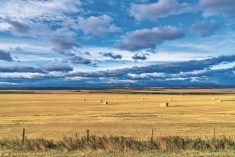


Prairie farmers have always farmed in a risky climate, dealing with drought, hail, excessive moisture and early frost, to name just a few challenges.
But researchers say the nature of that risk is beginning to change, as shifting global weather patterns reshape prairie growing conditions.
Read Also
Farmers don’t need to fear conservation agreements
There are several reasons why a land conservation agreement might be a good idea for your farm.
Winters are warmer, snow is melting earlier and, in some areas, snowmelt now happens weeks earlier than it did a generation ago.
The result is a farm environment that is becoming more variable, with longer droughts, occasional flooding in unexpected places and greater swings between wet and dry years.
The outlook isn’t uniformly negative. In some regions, longer growing seasons and more heat units could boost crop potential.
And many experts say farmers are already adapting by improving soil health and water retention and creating flexibility in their cropping systems.
Still, greater climate variability, especially around drought and water supply, means farmers will need to stay informed and continue adjusting both practices and mindset to manage a more unpredictable future.
Weather shifts already underway
The most obvious effect of climate change in the Canadian Prairies is warming winters, says Dr. David Sauchyn, director of the Prairie Adaptation Research Collaborative and a professor at the University of Regina.
He says while extreme cold also still occurs, it is becoming less frequent and shorter in duration.
“What has changed fairly dramatically is the frequency of really low temperatures, and especially the duration,” he says. “We still get minus 35, but not for weeks on end.”
Extreme heat isn’t new to the Prairies, he adds (the 1930s remain the benchmark), but seasonal timing is shifting. Earlier snowmelt is altering how water moves through prairie landscapes.
“The key to climate change is its impact on our water supply,” he says, adding that as these conditions continue, farmers can expect snowmelt to occur earlier in the year. “So, come the end of the summer, there’s less water available in the streams and lakes. That’s the major impact of temperature: it’s on the snowpack and the snowmelt.”
In some cases, precipitation that once fell as snow is now arriving as rain, he says.
“We expect rain in winter, which we’re already seeing.”
Hydrologist John Pomeroy says prairie warming has already surpassed global averages.
“In many parts of the Prairies, in some seasons, we passed two and a half degrees already,” he says, with snowmelt now occurring about three weeks earlier than in the mid-20th century.
“We’re getting earlier melts, but we’re also getting mid-winter melts — big ones that just weren’t common at all,” he adds. This increases spring flood risk as ice layers prevent water from soaking into frozen ground.
Rainfall isn’t rising overall, he says, but it’s more concentrated. Multi-day storms, up roughly 50 per cent since the 1950s, are driving more erosion and flooding.
“We were always prepared for spring flooding … but not expected to have flooded fields in July.”
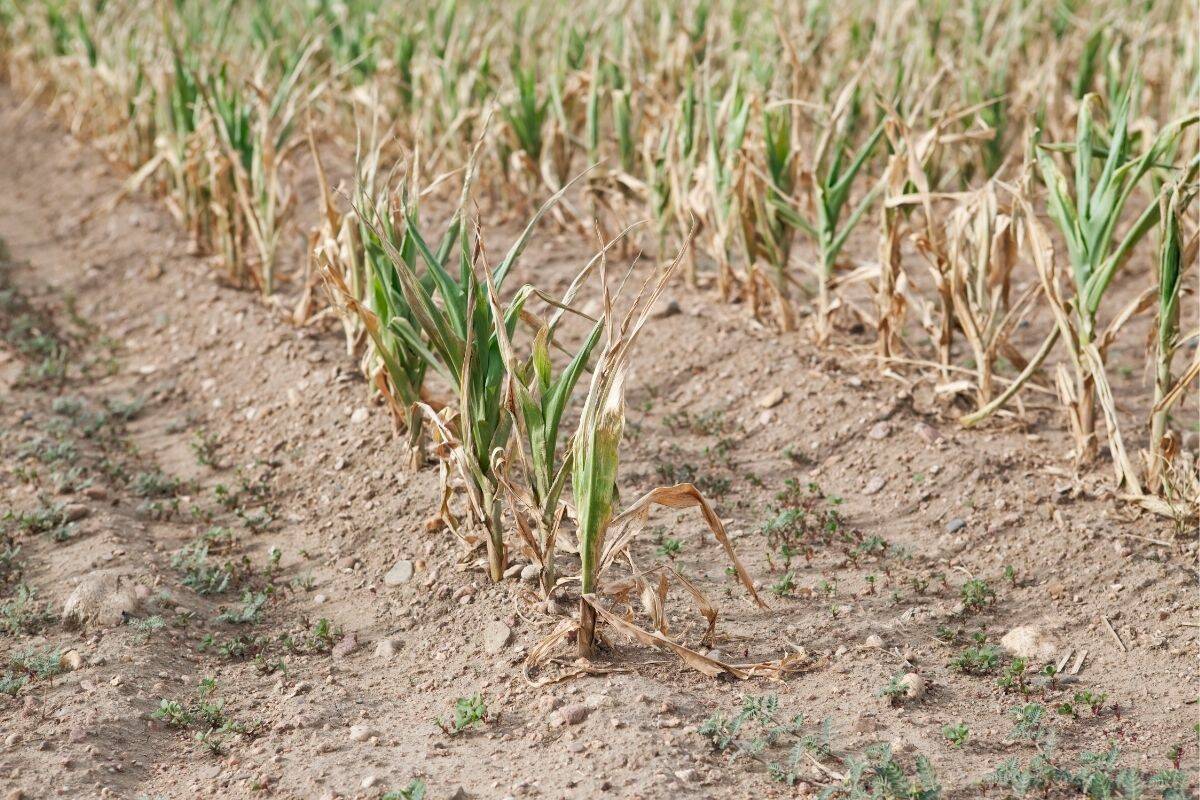
Drought, however, remains the defining constraint, now expanding into parts of the Prairies, particularly the northern and eastern grain belt, which historically saw fewer dry periods.
“The ultimate limitation in our part of the world is drought,” says Sauchyn.
“Despite our climate change forecasts, it will be possible to both prevent crop losses and take advantage of a warming climate.”
Dr. David Sauchyn
What’s coming next: Hotter, drier, less predictable weather patterns
Looking ahead, researchers say warming on the Prairies is very likely to continue.
Just how much, however, will depend on greenhouse gas management, says Pomeroy.
“We’re probably not heading for what, 10 years ago, we would have called the ‘worst-case-business-as-usual-scenario,’ … But we’re probably headed for three to four degrees of warming overall.”
Because the Prairies are located deep within a continent, warming here could exceed global averages, he says.
“The bad part of that is that it’s most intense in the summer and in the winters.”
In his estimation, summer is getting hotter, sometimes by up to eight degrees in the Prairies and winter is getting much warmer as well.
Earlier models suggested a wetter future, but newer projections point to a drier continental interior. “Hotter and drier is going to be really tough for us,” Pomeroy says.
He also believes that the effects will vary. Dryland farming in the western and southern Prairies may become far more difficult, or even impossible in some areas, while parts of the north and east could see yield gains in some years.
Water supplies will also become less reliable, he says.
“The glaciers will have melted out … by mid-century,” he says, adding that declining snowpacks will reduce late-summer flows and make irrigation more challenging.
Silver linings to changing weather patterns
There is good news too, say experts: prairie agriculture is already adapting, arguably faster than the climate is changing.
Sauchyn says farmers are already adopting soil health and moisture management practices, including the use of cover crops, intercropping, maintaining diversity in the field and limiting tillage.
“All those principles of soil health … that increase and maintain soil moisture and carbon, they seem to be effective adaptations for what we expect from a changing climate,” he says.
Furthermore, he says that we are already seeing how effective these practices can be in response to changing climate patterns.
“Those producers have been really careful about maintaining a cover and improving the soil health. They’re producing a crop even though we’ve had some pretty dry years.”
Sauchyn says there are also notable potential upsides to changing climate patterns for Canadian farmers, especially those in cooler, previously marginal regions.
Warmer winters and a longer frost‑free season mean more heat units and a longer growing season. This can boost productivity and open up new areas to cropping, particularly along the northern and western margins of the grain belt, where short seasons used to be a key limitation.
Sauchyn also notes that, over time, more of the increased precipitation is likely to come in winter and spring, aligning with crop water needs, even as drought remains the ultimate constraint.
“Despite our climate change forecasts, it will be possible to both prevent crop losses and take advantage of a warming climate.”
Adapting to uncertainty: What comes next
Although Sauchyn, who comes from a farm family himself, says he never tells farmers what to do, he will share what the science reveals in terms of effective management strategies.
Based on his research, he believes maintaining soil structure and water storage will remain especially important, as well as continuing to adopt soil health and moisture management practices.
Pomeroy also believes that it will be critical for farmers to be adaptable in their cropping decisions and management strategies.
“Producers have to be very, very flexible in what they plant in different years,” he says. “When you get a wet cycle, take advantage of it, get bumper crops … but then be ready for those dry cycles.”
He says farmers may also increasingly rely on better forecasting tools and weather data to guide decisions, and that more variable precipitation patterns could also encourage greater interest in water storage and irrigation where feasible.
He also believes there will be a role for governments to play in supporting farmers through these challenges. This should include continued federal funding for research developing crop systems suited to warmer, more variable conditions. It could also mean providing financial support for farmers if and when times get tough.
“There’ll just be years where you can’t do much of anything,” he says. “Governments have to be ready with those financial instruments that helps them in that.”
Because climate volatility will affect entire regions, co-operation between farmers, researchers and policymakers will also be essential, he says.
“Farmers won’t be able to do that alone.”
Change is the name of the game
Prairie agriculture has never been static, and climate change is simply the latest force reshaping how farmers work the land.
What’s different now is the pace and unpredictability of that change.
The future will likely bring sharper extremes, according to experts, but it will also bring new opportunities in some regions, along with tools and practices that can help farmers adapt.
In many ways, that adaptation is already underway. Canadian farmers are improving soil health, refining water management and making more flexible cropping decisions, steps that not only respond to today’s challenges, but that build resilience for the future. Supported by ongoing research and innovation, these changes will help position prairie agriculture to remain productive and competitive, even as conditions evolve.
The climate may be changing, but so, too, has farmers’ capacity to respond to it — and that may be the greatest advantage for Canadian agriculture.
How and where climate change could benefit prairie farming
While climate change brings real risks, experts say it also creates new opportunities — especially along the northern and western edges of the prairie grain belt, where cold and short growing seasons have historically limited production.
Key potential benefits:
Longer growing seasons = more crop potential
Warmer temperatures are already extending the growing season across the Prairies. Research shows the frost-free period in Canada has increased by more than 20 days over the past century, with measurable gains in growing degree days and heat units. According to prairie climate change and adaptation expert Dr. David Sauchyn, the expanding window between last spring frost and first fall frost is “mostly good news for farming,” allowing crops more time to mature and potentially boosting yields.
New areas opening up to cropping
Warming temperatures are increasing heat units in cooler regions, allowing crops to expand northward. Studies show rising growing degree days have already made it possible to grow crops like corn farther north on the Prairies, where it was previously not viable. Dr. Sauchyn says, as the climate continues to change, there could be increased potential for productivity in these regions. “In the past, the limitation has been heat units … that problem is going to be alleviated,” he says.
Expanded crop options, including winter crops
Milder winters and more winter and spring moisture could make crops like winter wheat more practical, similar to systems that are already common in the northern United States, says water and climate change expert Dr. John Pomeroy. This could also open the door to other new crops.
Higher yield potential in some regions
In some areas, especially in the northern and eastern Prairies, longer growing seasons and increased precipitation have the potential to support higher yields in many years. More heat units and growing days can improve crop development — if moisture is sufficient.
Greater viability for irrigation and intensification
More heat units and longer seasons could make irrigation economically viable in new areas, supporting higher-value crops and increased productivity.
Bottom line: Climate change may shift where and how crops are grown, but in some parts of the Prairies, it could significantly expand what’s possible.