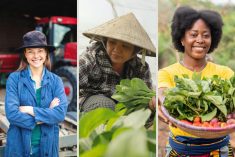

Many outside the ranching community may still see it as a male-dominated industry. But, to Renee Ardill, looking back over the decades, gender has never been an issue.
“Women have always been involved in ranching, how much depending on their situation,” she says. “Those with a family might work closer to home but a man and wife with no children would work alongside each other. I think we’ve moved past the women in agriculture issue.”
Ardill, born in Pouce Coupe, B.C., in 1954, is the third-generation Ardill to run the family ranch. (Scan the QR code to read about the ranch’s history.)
Read Also
Celebrating women in agriculture
If you’ve been a long-time reader of Country Guide, you’ll have read many articles in our pages over the years…
And while a perception that women are not taken seriously in the industry still lingers, many women are ahead of the game. With decades of experience, disappointments overcome, constructive support from colleagues and friends, they are accomplished ranchers with an inner core of confidence.
“People make too big a fuss over a woman doing ag work. If they can do it, let them,” says Ardill. “Male or female, you are dealing with the same problems. You don’t get cut any slack being a woman.
“A couple of women I know simply carried on after their husbands died. It wasn’t an issue. When I was president of the BC Cattlemen’s Association (2020-22), someone asked me what it was like as a woman being president. I thought that it shouldn’t make any difference. Just do the job.”
Although as a child Ardill received a formal education, it was the hands-on, lifelong experience working with her parents that formed the foundation of her knowledge.
“I always helped on the ranch and even when I was a preschooler, one of the ranch hands — I don’t remember his name — put me up on his horse and I sat behind him as he went to check the cows. I was always involved, helping Dad and Granddad.”
This set her focus on a lifetime love of training cow horses — and Ardill knows that women can bring more insightful observations of cattle management to the table.
“My sister once asked, ‘How can I make this cow happy?’” she recalls. “She recognized that a cow might have emotions. Not many men would. But I think if cows are happy or relaxed, they settle down, eat and do things normally. They are healthier.”
Healthy cattle can mean greater weight gain, fewer losses, possibly greater returns for meat on the bone. She says that ranchers face enough challenges today but keeping their herds healthy is one within their control.
Other challenges outside their control, however, loom large.
Back-to-back challenges
With the U.S. threatening to pull out of CUSMA (Canada-United States-Mexico Agreement, also know as USMCA), a joint review is on the political agenda in 2026. Given how integrated the North American beef industry is, there could be serious consequences should tariffs be imposed in a new CUSMA deal causing trade upheavals, significant cost increases and threats to profit margins for producers.
“So far, we haven’t been affected by tariffs,” Ardill says. “Beef is under CUSMA. Right now, American cattlemen are keeping their heads down. The feedlots down south really rely on our cattle. And the price of beef today is higher than it’s ever been.”
But challenges are not new to the Ardills. They form part of the historical thread of the ranch.
On May 20, 2003, the first confirmed case of bovine spongiform encephalopathy (BSE) was confirmed in Alberta. The BSE crisis forced immediate closure of the U.S. border to Canadian cattle, and the Canadian government suspended export permits. It was a massive blow given that some 50 per cent of Canadian cattle/beef was being exported.
In 2015, local farmers and ranchers faced a major threat that became reality: construction of the Site C hydroelectric dam 14 kilometres southwest of Fort St. John. A portion of the Ardill’s ranch was right in the path of the flood plain — prime Class 1 agricultural land used by the Ardills to graze cattle and grow hay and grain.
Site C came fully online in August 2025.
“We don’t know what the reservoir will do,” says Ardill. “There’s some erosion, but time will tell. The bottom flat we were using for grazing — and it was a good piece of land for growing hay and grain. We objected to the project, fought it all the way to the Supreme Court of B.C., but we lost and we’ve moved forward from there.”
Another significant challenge is climate. Local ranches have experienced crippling drought the past several years. This has created a lack of forage for grazing and less hay put up for the winter, forcing farmers to buy enough hay to get them through.
“In 2023 and 2024 we bought more hay than ever in our lives due to drought,” says Ardill. “Last year (2025) was better. We got a decent rain in the spring as well as a rain after planting oats, barley and peas. We don’t get those in until after the grass has started. However, the grass didn’t do quite as well, so we needed to buy hay.”
In a time of back-to-back challenges, Ardill says that the greatest challenge is simply surviving.
“With costs, everything is so high and returns are so low. Some people have off-farm jobs like logging. I did when I was younger. Now there’s enough to keep us busy and I don’t have time for it. But after BSE in 2003 and years of drought, coupled with the costs of fuel, equipment and maintenance, people feel they’ve had enough and they are forced to reduce herds, sending cattle to market. It can be really tough.”
Yet even as the Ardill family faced the headwinds of disease and drought, they maintained focus on the protection and quality of their herd.
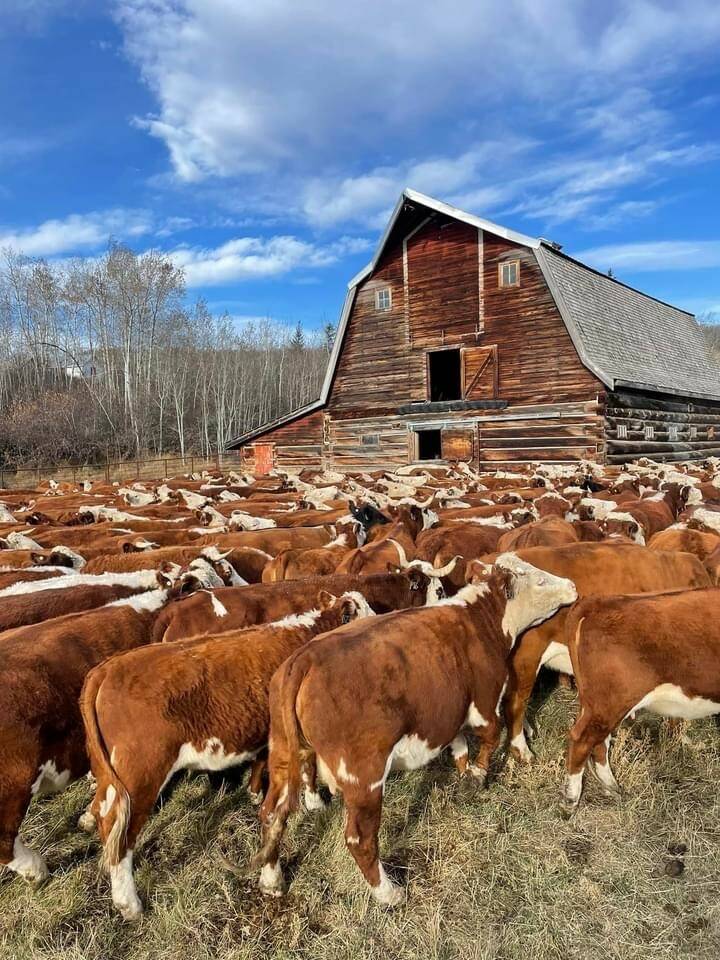
“We have improved our herd quite a lot,” says Ardill. “Dad started this off. We made a commitment to buy quality Hereford bulls. This allowed us to produce good quality animals.”
She says upscaling bull stock can be expensive and that ranchers must learn to look at their stock for what it is. “You must be able to recognize improvement needs and get good bulls or cows, but not all at once. I know some people who don’t change. They stay with what they’ve got and don’t invest the time and money to make improvements. I have known people who have had cows all their lives but don’t understand them. I’m proud of what my herd has become.”
Ardill knows that improvements take years to achieve, especially within the confines of an industry that doesn’t have much room for change. For a cow/calf operation where cows are range animals and calves are sold each fall, Ardill notes that the model works about as well as it can considering annual market adjustments and shifting weather patterns. And as much as cattle are valued, the greatest value is grass and water. If you don’t have feed, she says, you don’t have anything.
For anyone starting out — male or female — it’s an extremely challenging sector.
“Learn what you can,” Ardill urges. “Talk to neighbours. Try new things. Learn new technology. Be computer literate. Learn the value of drones. Start small. Seek a mentor. Work in a ranch environment where you can work with machines, ATVs, specialized equipment and horses. Understand how to read the weather and what that means in real terms. You’ll be spending a lot of time in it. Take appropriate courses. Study finances, cash flow, seasonal costs ahead of incomes and understand what that means in terms of budgeting and planning.”
The truth is that few new ranches are starting from scratch. The huge financial commitment makes it prohibitive for many. And what newcomers lack — or may never fully develop — is an intimate connection to the land. Ranching is more than herding cows and taking calves to market. For ranchers like Ardill who are born into it, they sense the complex rhythm and flow of seasons, the vagaries of weather, the first growth of grass in spring, the replenished water sources after rain, the birth of calves, the habits of cows and the quiet dependability of a horse.
It’s a connection they breathe from the moment they are born.
It’s a connection that earned the Ardill family the Century Farm Award in 2020 from the provincial government for their 100 years of dedication to B.C. agriculture.
And it’s a heritage Ardill treasures.