


We’re a quarter of the way through the 21st century, and most farmers are still trying to deal with huge stacks of paper.
Invoices. Contracts. Receipts. And then there’s the inbox full of emails.
If anyone knows how to keep financial and other documents in order, it’s Lacey Frizzell. Her consulting business helps farmers and businesses organize their financial information, then set up systems to keep it organized.
Read Also
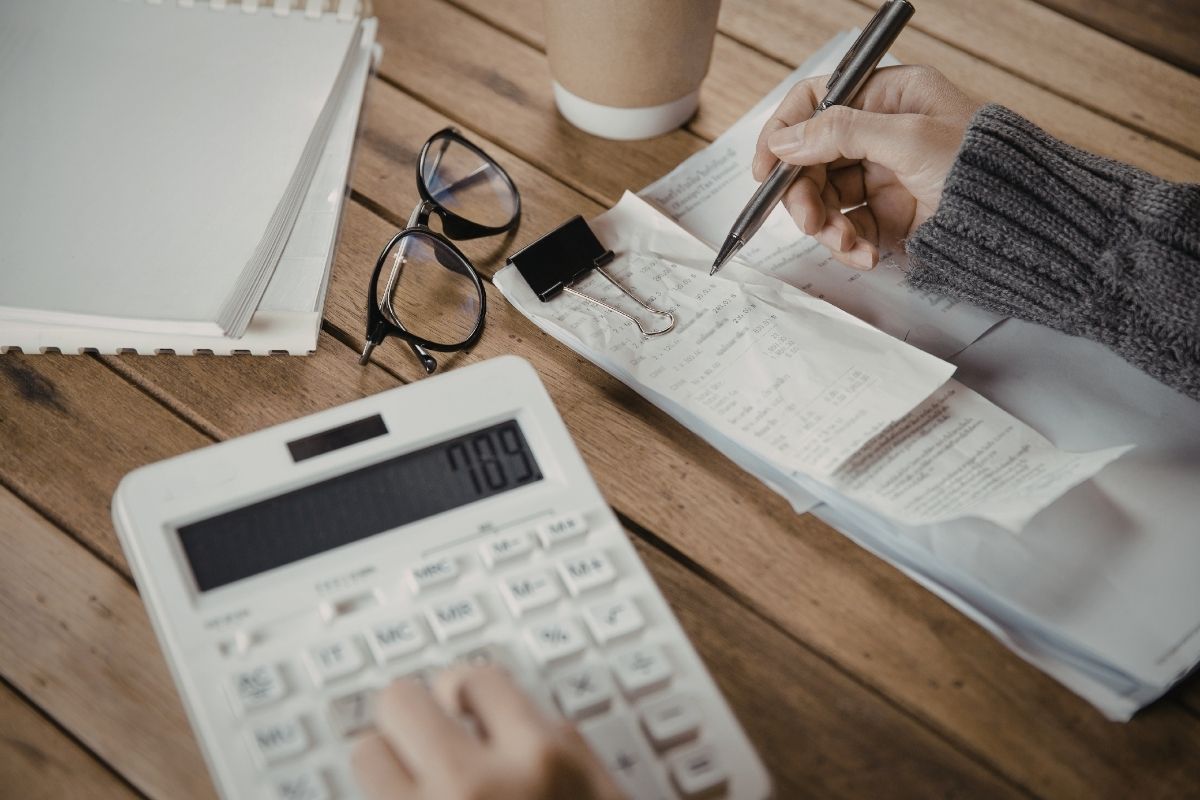
Farm budgeting in seven steps
Increasing operational costs add complexity and risk to your farm business. It’s a good time to focus on farm budgets to make better business decisions. Here’s how to do that in seven steps.
“Farmers are unique,” says Frizzell.
“There’s a lot of information being thrown at us from a variety of sources, which makes it very hard to keep organized.”
And Frizzell knows a thing a two about organization. She juggles work on her family farm near Stirling, Ont., a job in the banking sector, a nearly two-year-old and a newborn.
A busy life like hers requires a straightforward organizational system where it’s clear where every piece of paper should go, and someone is responsible for putting it there.
If this isn’t the case on your farm, maybe your filing system needs at best a few tweaks, at worst a complete overhaul.
Cut the clutter
Don’t file it unless you really need to keep it.
Will anyone on your farm management team look at it again? Is it relevant for legal or financial reasons? “What is the purpose?” Frizzell asks.
Usually, the purpose is for the Canada Revenue Agency (CRA).
Generally, the CRA requires businesses to keep records on hand for six years. That is, six years after the end of the last tax year they relate to. If your farm’s year-end is December 31, as of January 2026, you should be storing records from as far back as fiscal 2019. If your farm’s year-end is October 31, by January 2026 you should still have records around from your 2018/19 fiscal year.
This covers most expenses and income, but paperwork related to capital purchases should be kept even longer. Keep receipts for anything that would be relevant if you sell or wind down your farm.
This includes any land or equipment showing the book value (e.g., initial purchase price). Selling buildings, quota or any equipment you’ve been depreciating has tax consequences — and CRA might ask for original purchase documents.
The bottom line: you don’t need to keep everything but check with your accountant if you’re not sure.
Paper or pixels?
Once you’ve decided to keep that receipt, you have to decide if you’ll file it as a paper or digital record. Both have downsides. If you choose a paper system, you’ll be printing out email attachments and bank transfer notifications. If you choose digital, you’ll be scanning paper receipts from Home Hardware.
Frizzell loves technology, but she uses a paper-based system.
“I still recommend that people print everything because paper is still seemingly king.”
Printers jam. Paper piles up. But Frizzell said it’s worth coping with the hassles of paper to avoid problems with technology.
First, she says, technology is never 100 per cent reliable. Hard drives fail. USB sticks get lost. Cloud services have storage limits and generally there is an annual fee associated with the service.
Second, even if your storage methods are perfect, your technology can still become obsolete.
If you’re storing receipts through an online bookkeeping program, what if the software company goes out of business? If you change bookkeeping programs, will you still be able to view scanned invoices from past years? Will the records always be readily available and easy to locate?
“I would love to be more enthusiastic about digital record-keeping,” says Frizzell.
“I’m just finding that there’s no live technology that you own as an individual, without paying a subscription.”
A third potential problem is the safety and security of your digital information.
“Is your information being shared on someone else’s platform? I caution people on what information they want to share.”
In a worst-case scenario, a hacker may have access to all your digital information.
If you favour keeping your records online, Frizzell recommends working with your local technology guru to set up appropriate firewalls and anti-virus programs.
Rules are for everyone
No matter where your records are stored, a good bookkeeping system has a set of standard operating procedures (SOPs) that is followed by everyone on the farm.
Making sure you know where originals are is one SOP Frizzell highly recommends.
“Ultimately there should be one central location where records are held. Especially for audit purposes and recall.”
Some bookkeeping programs allow more than one person to upload scanned receipts and invoices straight into the software. This is convenient for employees picking up parts or materials; they can scan and upload their receipts before they come home from town.
But where will you have them store the original paper copies?
With more than one person inputting information, bookkeeping can become a bit messy.
For example, if one person uploads receipts from the local “Co-op” and another adds invoices from the “Coop,” your books could show two separate input providers.
Or consider item categories. Should those replacement knives for the headers be classified as “harvest expenses” or “combine repairs”?
It’s important to set up standard procedures or make sure your bookkeeper has an eye on things.
It’s also important to have a bookkeeping backup plan — if something happens to your bookkeeper can someone else access your financial records?
Your farm, your plan
The best system is the system that works for your farm and is kept up to date. No one is grading your efforts.
Accountants aren’t usually looking at your record-keeping (depending on the type of financial statements you need) but at your bookkeeping.
Unless your financial records will be professionally audited, you’re keeping records to serve requests from CRA and your own managerial needs.
And since no one but your farm team needs to see a lot of this information, you have an opportunity to develop an organization system that’s perfect for you.
Decide who needs access to the books and the bank accounts. This will be unique to every farm. Some farms have just one manager; some have several.
Sometimes limiting access to accounts can safeguard your finances. Unfortunately, Frizzell has seen situations where a farmer’s new partner has been able to drain bank accounts when a relationship headed south.
Some staff might need access to your filing system, maybe to check receipts or invoices. But, Frizzell says:
“Not all employees need access to everything.”
Some bookkeeping programs use password protection to restrict access to some information while still allowing staff to access specific files.
On some farms, several members of the management team might want to access the bookkeeping system. As a farm manager herself, Frizzell says, “I would strongly urge to see paper copies of invoices.”
Frizzell files her paper copies by date and by enterprise (for her, that means separating the cattle bills from the cropping bills). She also keeps separate files for invoices and receipts that they access more frequently.
Large farms might have a chief financial officer, but even on small farms there is typically just one person in charge of financial record-keeping. Sometimes, a second person might be actually paying the bills.
Frizzell prefers a “check and balance system.”
This could mean one person writes the cheques and a second person reviews them, or it could mean requiring two signatures on each cheque.
As online bill payment becomes more common, Frizzell recommends using an online cash management service that allows you to set up a two-person system for these payments.
For example, one person can prepare e-transfers, while a second person must approve them. (If you’re looking into this, search for “two to sign” accounts, or “dual sign” accounts.)
Check and balance systems protect farms against the rare, unfortunate situation where one partner so desperately needs cash that they resort to “borrowing” from the farm. A check and balance approach might not be required for one-person operations, but “as you grow, it’s something to look into,” Frizzell says.
These systems can also help reduce simple errors. Who hasn’t typed 47 when they meant 74?
“A lot of things are human driven, and as humans, we do make errors,” says Frizzell.
Keep it current
No matter what system you use, it’s only useful if it’s up to date. For large farms, this could mean inputting information daily. Smaller farms might use a monthly system.
“It becomes so messy so quickly,” Frizzell says.
If regular bookkeeping sessions are not for you, maybe your system needs a redesign to simplify processes. Or maybe it’s time to hire a bookkeeper.
Frizzell has found some farmers are reluctant to pay for a service such as bookkeeping that they know they could do themselves. If you’re someone who would rather be in the field than a filing cabinet, consider the benefits of hiring a bookkeeper:
Accountants typically charge by the hour. At year-end, your accountant will need less time to calculate your taxes if your financial records are well-maintained and reasonably error-free.
The headache of a CRA audit increase exponentially if your receipts and records are hard to find or not available at all.
“If you don’t have a great system (or a great accountant), if you go through a CRA audit and you don’t have the information or it’s been accounted for wrong, it can cost you thousands and thousands of dollars,” cautions Frizzell.
Bookkeepers can also be asked to take on additional duties, such as helping to develop environmental farm plans, or making sure vegetable production is up to Generally Accepted Accounting Practices (GAAP) standards.
If you want to learn to do your own bookkeeping (or train someone new) could you pay your current bookkeeper to train you? There are also courses available.
“Some of it is pretty simple,” Frizzell says, “but then there’s things that you need to figure out like what capital cost allowance depreciation class does the gravity wagon go in or that new tractor.”
Strong books, strong business
Your management team can use reliable, up-to-date financial information to make decisions. Farm Management Canada recommends using financial statements to calculate financial ratios and evaluate your business.
But financial reports are only as good as the information and filing system used to create them. Bookkeeping isn’t the most glamorous job on the farm, but it’s the foundation of other decisions.
From borrowing money to buying land to weathering a bad year, you’ll make more effective choices if your records are organized, current and accurate. CG