
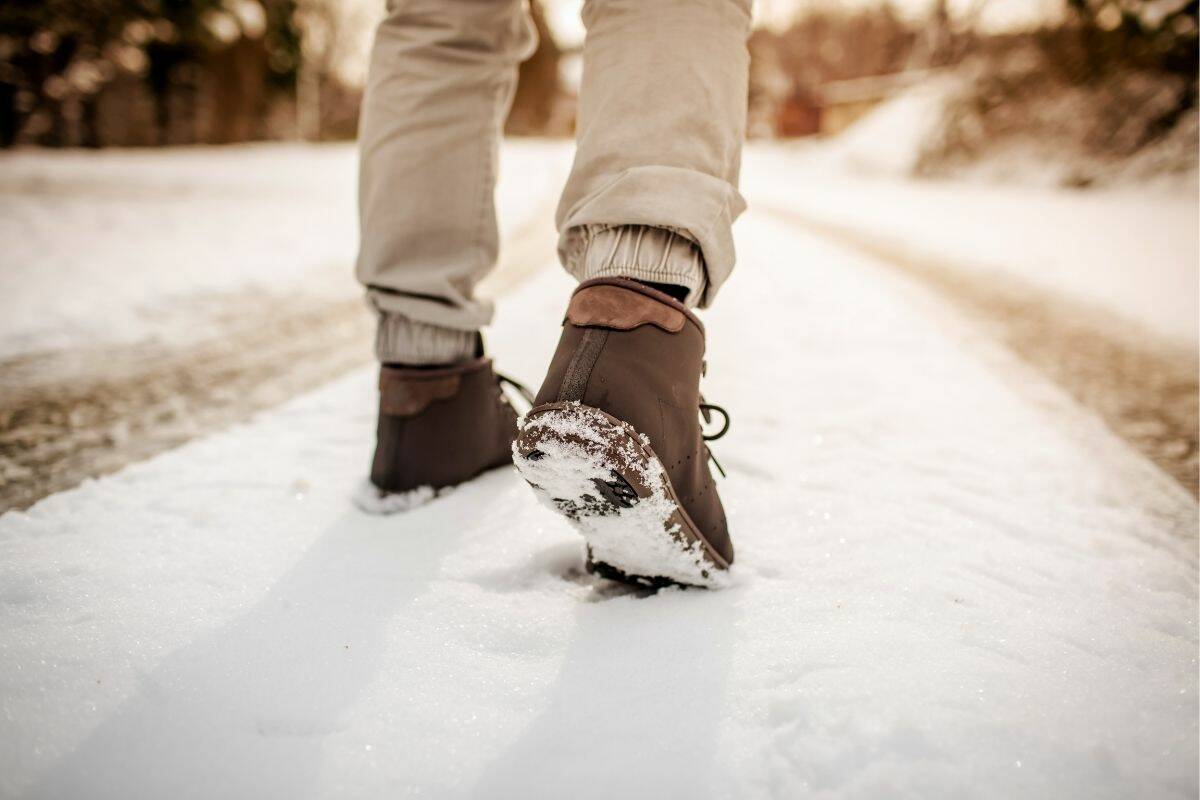
As Canada still finds itself in winter’s grip, we should practice extra vigilance to prevent slips and falls on the cold, icy landscape.
Not every fall can be prevented, but a little focus and intention on our movement can go a long way toward ensuring our bodies are best prepared for resiliency on slippery, uneven surfaces.
Beyond the obvious suggestions, such as ensuring you have appropriate winter footwear and moving more mindfully than usual, let’s chat about movement practices that can support your balance, agility and body awareness.
Read Also
The why and how of preserving farm family history
Part two of a series explaining why and how to preserve farm family history.
I’ve noted some common circumstances when I hear about slips and falls from my clients. Often, there has been a recent transition to winter footwear. Heavier boots, thicker soles and more robust shoes mean good things for warmth and grip but can present a challenge for our internal body awareness, or our proprioception. Proprioception is just a big word for how our body knows where it is in time and space.
Our body is covered with proprioceptive nerve fibres that help us sense our environment, maintain balance and move with co-ordination and agility. Our feet are especially full of these types of nerve fibres. When we wear thick, robust shoes we are dulling our sense of awareness in our feet. This can set the stage for weakened soft tissues, decreased strength and an increased risk of not being able to course correct when things get slippery.
The solution isn’t to go bootless. Instead, engage your feet regularly and keep the connection between brain and body to sense the world around you, even when you’re in your winter gear.
Winter footwear also tends to limit our ankle range of motion, which changes our mobility through the entire lower body. A stiffer gait, with less control, can lead to stepping just wrong enough on ice to cause a slip.
Try these four exercises at home routinely to keep your ankle and foot moving. They take no more than a few minutes a day and can prevent falls from having an impact on your stride. As a bonus, these exercises are also great for preventing and treating things like plantar fasciitis, fallen arches and flat feet.
Slow-motion foot taps. Sit comfortably with your foot fully resting on the ground. Slowly raise your foot off the ground, keeping your heel planted. Ensure that you lift from the middle of your foot, so that your pinky toe and big toe raise levelly. Take about three to four seconds to raise up, and then slowly lower back to the ground. Do one foot and then the other. Repeat for 10 rounds per side, a few times each day. A great warm-up prior to walks or runs!
Toe curls. Sit comfortably with feet resting on the ground. Keeping your foot on the ground, curl your toes into the ground. You could place a towel under your foot (spread out) and curl the toes into the towel to drag it in towards the foot. Curl the toes in and out 10 times. If you use a towel, curl the towel in for 10 curls, then practice pressing it back out again using the toes (uncurling). You may feel the arch muscles are working to do this; this is a good thing. Repeat daily, a few rounds where possible.
Tandem walking. Take a step forward, placing one foot directly in front of the other (heel to toe). Walk forward 10 to 20 steps, stacking your feet as you go. Challenge yourself to look forward (not at your feet) while doing this. As an additional challenge, walk backward in this way to your starting point. Repeat daily, a few rounds where possible.
Tiptoe walking. For 10 to 20 steps, walk as high as you can on your tiptoes. As you walk, work to keep your weight in the centre of the forefoot, not more to the outside or inside edge of your foot. Try to walk in a straight line, sideways and backwards like this. Challenge yourself to keep eyes up and look ahead. Repeat daily, a few rounds where possible.
In addition to keeping the connection alive to your feet and ankles, I strongly recommend that regular balance challenges be added to the routine. This could be done as part of your regular workouts during the warm-up, while you’re waiting for the pot to boil on the stove or as you’re brushing your teeth.
Simply feel your foot on the ground, then shift your weight to one side. Think about pressing the ground away and engaging the same side hip muscles to balance on one leg. Stay here for ten seconds or more, then repeat on the other side.
Intentionally keep your eyes up and practice balancing on the leg with no assistance from your hands. Regularly working on balance supports healthy joint mobility and keeps our mind and body connected. It also increases your chances of not falling when facing the unpredictable outdoors this time of year.