

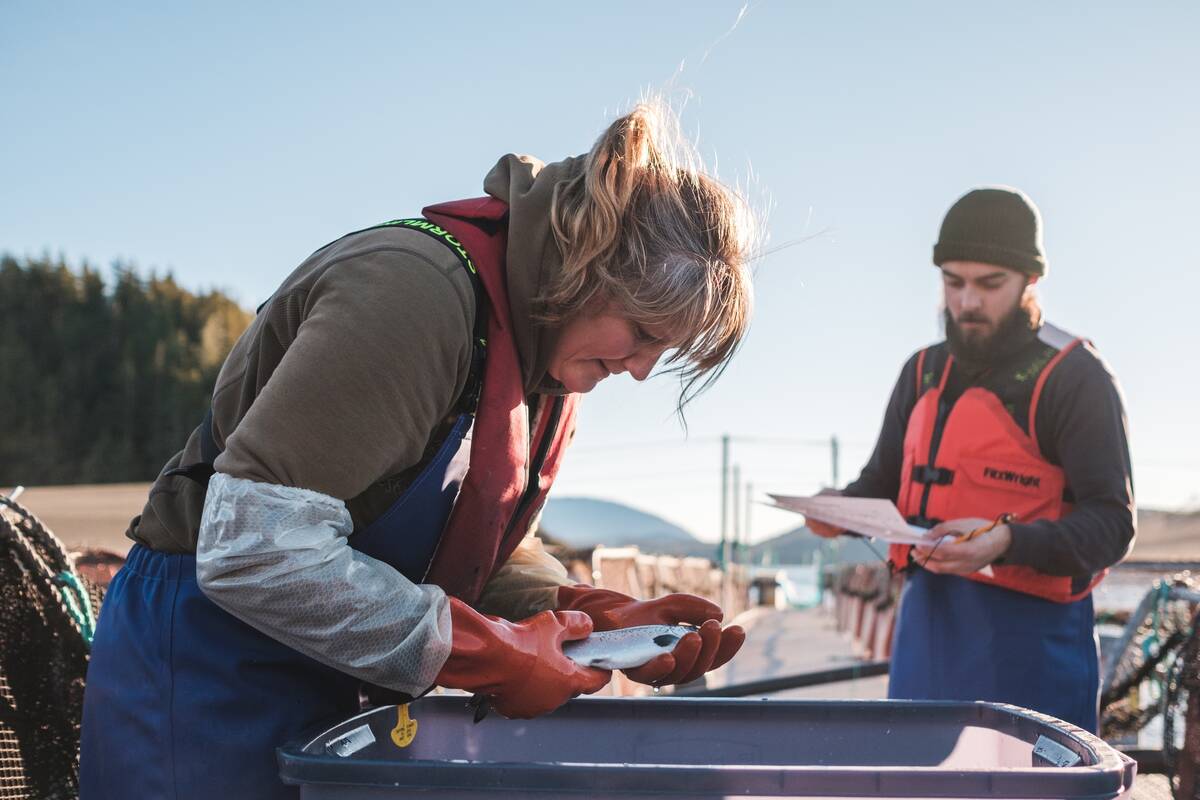
The federal government should class aquaculture as agriculture so the industry can fulfill its growth potential, sector organizations say.
“We share, as a sector, all the same attributes as the rest of the farming sectors from genetics to raising animals in pens and dealing with animal welfare issues and animal health issues,” said Tim Kennedy, president and chief executive officer of the Canadian Aquaculture Industry Alliance.
Read Also
Canada blocks meats, dairy from Greece over foot-and-mouth disease
To remain free of foot-and-mouth disease, Canada is blocking livestock, uncooked meats, raw dairy and other products from Greece following outbreaks in cattle and sheep there.
WHY IT MATTERS: The aquaculture industry says demand is there for Canadian seafood but without sufficient support, its seeing more imported product moving into grocery stores.
The Canadian Aquaculture Industry Alliance and seven provincial aquaculture organizations wrote a letter to the federal, provincial and territorial governments. They called on them to use Canada’s Next Policy Framework for Agriculture to help their sector grow — and to class the industry under Agriculture Agri-Food Canada (AAFC).
“Our lead department has been the Department of Fisheries and Oceans. The Department of Fisheries and Oceans is a habitat protection and fisheries management department. They deal with the wild capture sector,” Kennedy said.
Aquaculture is the farming of fish and seafood.
Aquaculture as agriculture for growth
The Department of Fisheries and Oceans isn’t growth oriented. AAFC is, Kennedy said.
“We have flat lined in Canadian production for aquaculture for 20 years, and we have the largest coastline in the world.”
The Canadian Aquaculture Industry Alliance has been asking to be classed under AAFC for the past ten years. The aquaculture industry could then be classed as agricultural and reap some of the same benefits as agricultural industries. For example, aquaculture farmers would have access to the AgriInnovate program.
The aquaculture sector would also like a collaborative insurance program for shellfish farmers and freshwater producers.
Aquaculture is a $5 billion sector in terms of economic activity — the equivalent of 1.4 per cent of farm gate sales in Canada.
“In terms of a relative comparison to the rest of the ag sector, that’s small,” said Kennedy. “One thing people should know is we’ve only been around as a commercial sector for 45 years. We’re young. Salmon production started 50 years ago.”
The Canadian Aquaculture Industry Alliance has about 65 members. Members include people who raise fish such as salmon, rainbow trout, Artic char, mussels and oysters.
Aquaculture farmers also grow a small amount of seaweed, which is largely used for animal feed.

Atlantic salmon farming biggest growth area
Atlantic salmon make up 80 per cent of the aquaculture sector. They’re farmed in British Columbia, New Brunswick, and the other Atlantic provinces. There is some rainbow trout production in Ontario and on the Prairies.
“Atlantic salmon is the most popular seafood product in North America and increasingly in Europe and around the world,” Kennedy said. “It’s like the rest of the farming sector, when you have an animal, a breed that is particularly good for production, like Holsteins or Herefords. Atlantic salmon are good to raise as farmed animals.”
Atlantic salmon are easy to raise in pens, unlike Pacific salmon, which are much harder to farm.
The demand for seafood is there, especially for salmon.
“I think because of the lack of overall support for the aquaculture sector, we’ve seen some declines,” Kennedy said.
There have also been some government-mandated shutdowns in British Columbia.
In 2024, the federal government announced it would ban open net-pen salmon farming by June 2029 and would require farms to transition to closed containment or other aquaculture systems.
“What we’re seeing is more product coming from other countries, especially Chile, into Canadian grocery stores. Canadians can’t buy the Canadian salmon they want to buy. This has been a real problem,” Kennedy said.
A deeper partnership between Agriculture and Agri-food Canada and aquaculture would produce a lot more salmon in Canada, for Canadians.
“I’d say globally as well. Aquaculture is the fastest growing food production sector in the world. There is an increasing demand for high quality animal protein. We’re low carbon footprint. We’re a very efficient product,” he said. “For instance, in the salmon sector, we’re basically about one kilogram of feed is producing 1 kilogram of fish.”
Benefits for the rest of the farming sector
In the letter, the Canadian Aquaculture Industry Alliance and the seven provincial groups highlighted value-added opportunities for the rest of the farm sector. When the sector first started, a lot of the fish was fed entirely marine based products. Now the Canadian sector only uses about 20 per cent marine based ingredients. About 80 per cent of the ingredients are from land-based farms.
The aquaculture sector is using oils, grains and ingredients like chicken offal, that would otherwise be put in waste products.
“If we can increase production, we’re going to increase the value add in Canada for other farmers,” said Kennedy.
The Next Policy Framework will be completed by 2028. Earlier this year, the federal government it was starting consultations across the country.
The next federal, provincial, territorial meeting will be held in Halifax in July. Kennedy said the areas of focus and decisions of what sectors are included under the Department of Agriculture and Agri-food could be announced by then.
“We’re still a couple of years away, but now is the time for all of the considerations and planning,” he said. “This is a very important time for us.”