

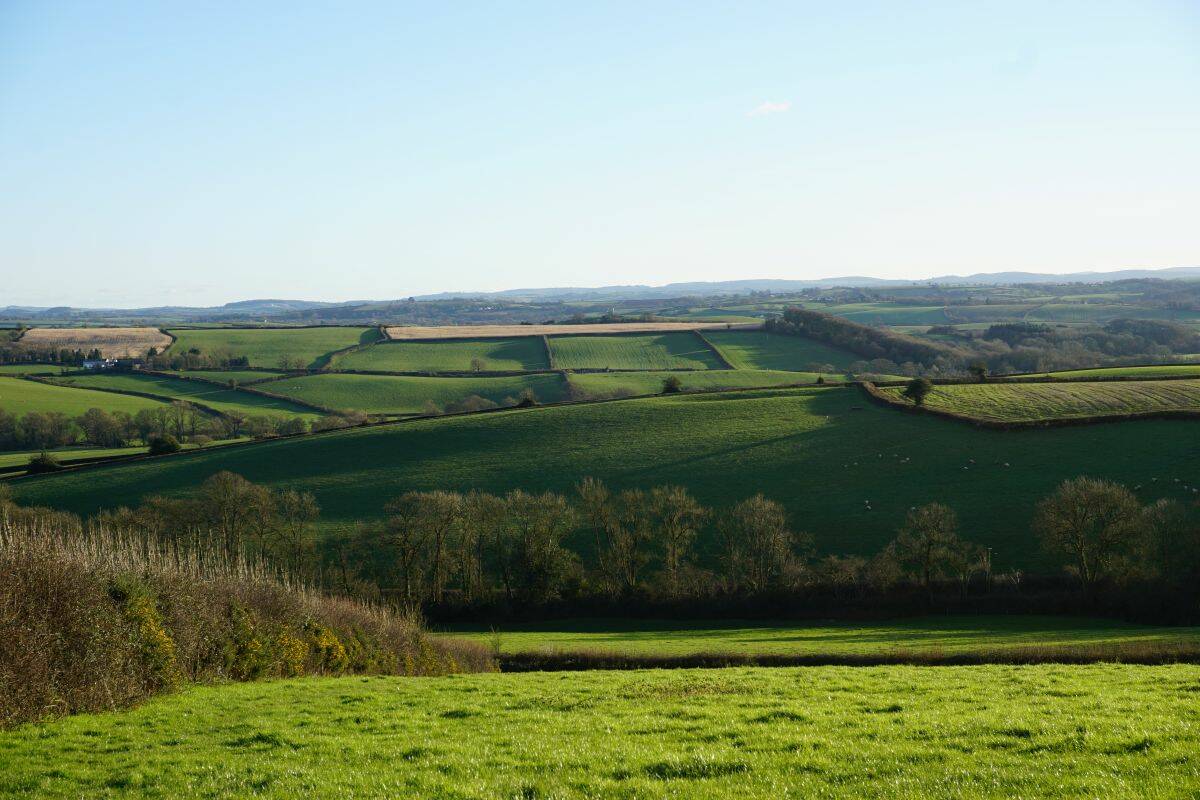
Across Canada, and around the world, farmers are witnessing first-hand the pressures reshaping our environment. From the disappearance of fencerows and wetlands to shrinking forests and culturally significant spaces, the landscape that sustains both agriculture and our surrounding ecosystems is changing rapidly.
Matt McIntosh, an Essex County, Ont. farmer and conservation enthusiast, recently published a Nuffield Canada report, Conservation in Farm Country: What Makes a Good Farm Environmental Scheme? which explores the challenging relationship between farmers and conversation efforts.
The report is a culmination of two and half years of travel, research, conversations and observations in which he explored how governments, local organizations and individual farmers are tackling conservation and restoration efforts. McIntosh traveled across several countries (Estonia, Latvia, Denmark, Ireland, Brazil, the United States, Canada and a few countries in the United Kingdom) and met with likeminded individuals to determine best practices to approach agriculture and environmental conservation.
Read Also
How women lead with confidence in agriculture
Women working in agriculture is not as rare as it used to be and with the help of peers and learning opportunities women are confidently stepping into leadership roles
“Farmers are the same, no matter where you are in the world,” says McIntosh. “We all have similar characteristics and want the best for our farms and surrounding environment, and we all want to leave a legacy for the next generation.”
Finding common ground
In his report, McIntosh identifies what works — and what doesn’t — in the design and delivery of agri-environmental initiatives, offering valuable lessons for Canadian policymakers, farm organizations, conservation authorities and farmers themselves.
McIntosh’s takeaway from his experience, and one of his report conclusions, is that on-farm environmental and economic gains do not need to be separate, that farmers can benefit from both — with the right programs in place.
“Nature is messy and what farmers want is straight lines,” says McIntosh. “But as production efficiency improves, we have a little more wiggle room to look at our practices. It doesn’t have to be one or the other, production and profit or environmental conservation; we can have both.”
McIntosh notes another common theme and barrier to conversation efforts here at home and across the globe: the cultural divide between farmers and conservationists. He explains that “as farmers, we’ve been incentivized to do more, to produce more. And sometimes that production-focused mindset trumps environmental or conservation practices.” Culturally, this mentality will require time to change and refocus, and McIntosh believes effective environmental programs that incentivize farmers to make positive changes are needed to make the change.
Cultural barriers to environmental conservation and restoration projects can easily crop up between neighbours, or even farm family generations, especially when one person wants to do something different. McIntosh explains that simply the act of changing a practice or implementing new ideas can be perceived by neighbouring farmers as criticism directed at them for their own farming methods, making it hard to change.
Other barriers to conservation efforts can be attributed to inadequate program funding and overly complex requirements, and the absence of on-the-ground extension support that often provides valuable resources and support to farmers implementing practices and programs.
Lessons from the field
McIntosh shares his observations in a series of case studies within the report. They illustrate a mix of success stories and cautionary tales across an array of on-farm environmental improvement efforts. He notes that the conservation and ecological programs that thrived had similar characteristics: a clear strategic vision, fair compensation for farmers’ ecological services, practical and timely support through extension, and flexible, farmer-driven delivery.
On the other hand, overly rigid or bureaucratic programs often failed to meet their goals, resulting in low participation and undermining the sense of shared purpose that McIntosh says is essential to long-term success.
“I looked for examples where people were winning, or encountering challenges from their programs,” he explains. “Those who were winning were realizing economic and ecological benefits. Those who weren’t had some clear red flags within their programs that restricted success.
Building programs that work
McIntosh believes conservation and ecological restoration success isn’t one-size-fits-all, especially since every farm and regional environment is so diverse.
“The successful outcome of any endeavour depends on the farmer, the program and whatever else you want to use to measure,” he says, citing an example from the United Kingdom where one of the determining factors of farmer compensation was the number and thickness of trees planted.
McIntosh questions the effectiveness of quantifying measurement standards and the unnecessary micromanagement of the program, and notes that other factors, such as increased biodiversity, could have been just as effective in determining the progress of the program.
No matter the standards used to define success, McIntosh offers several recommendations in his report for improving the design of conservation and restoration programs. They include:Establishing a strategic vision that integrates economic, environmental and social resilience before setting targets or metrics.
Compensating fairly for both risk and ecological services and delivering payments in a timely manner.
Investing in extension services and ensuring advisors are well-equipped to support farmers.
Empowering grassroots knowledge by engaging farmers early and often.
Balancing structure with flexibility, allowing room for innovation and regional adaptation.
McIntosh also recommends a shift in thinking when designing programs. He suggests approaching program development and implementation by asking whether a given conservation or restoration initiative truly empowers farmers to make positive change. “If the answer isn’t a clear ‘yes,’ the program may be missing the mark.”
Other practical recommendations include transferring program design and implementation to local levels when possible, striving for simplicity and ensuring initiatives are built for longevity rather than short-term results.
“You don’t need government-scale resources or complicated programming to make real change,” says McIntosh. He uses the example of re-establishment of Burren winterage, an ancient cattle production system in Ireland’s County Clare, which was one of the inspirations behind his Nuffield journey.
McIntosh explains that farmers in the Burren employ a system called “winterage” where cattle graze the region’s uplands from autumn through spring, helping to manage the landscape and regenerate grasslands. Despite the ecological benefits of this practice, the region’s winterage method came under threat from government conservation policy and general economic pressure in the 1990s. The result was the loss of a local grassland ecosystem.
So, farmers and environmental researchers developed a plan to reintroduce the proven winterage system. This regional initiative reintroduced winter grazing to maintain biodiversity and saw the development of a grassroots-led program, BurrenLIFE, established with the national government in 2010.
“Local farm and community efforts, guided by solid planning and farmer buy-in, can strengthen the environment, economy and social fabric of rural regions for the long haul,” says McIntosh.
Farming for the future
Exploring how rural landscapes are being effectively conserved and restored has helped McIntosh gain a deep understanding of what those efforts really involve. His experience also gave him a new perspective on efforts being made here in Canada, from on-farm projects through to how policies and programs are developed.
“Most Canadian farmers are already implementing beneficial conservation practices, but we can take those efforts further by opening conversations about the business and economic benefits of these practices,” he says. “We should also be thinking generationally, not just about what needs to be done now, but how we can leave the land for future use and enjoyment.”
Of course, it will also take the right policy supports, grounded in trust, fairness and flexibility, for farmers to continue as partners in conserving and restoring Canada’s natural landscapes.
A statement in McIntosh’s report reminds farmers that “agriculture may not be Nature’s best friend. It does not, however, have to be its greatest nemesis.” While there are plenty of barriers to the environmental conservation and restoration of ecologically and culturally significant spaces in agricultural landscapes, the solution depends on empowering the people who know the land best to shape its future.
To read Matt’s full Nuffield report visit Conservation in Farm Country: What Makes a Good Farm Environmental Scheme?