
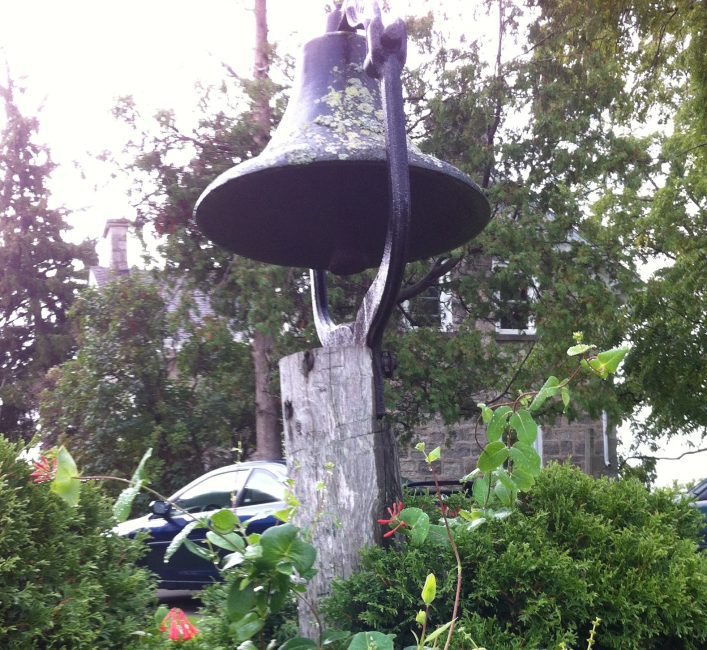
There was a big cast iron dinner bell in the middle of the farmyard where Maggie Van Camp grew up.
On a modern farm, it’s a relic. But a century ago when the farm was established, the bell was a way to call the hired hands and family together when meals were ready. It was rung for help if a fire broke out.
Read Also
When — and how — it might be time to tell dad “No”
When the next generation takes over the farm, it can be hard for Mom and Dad to let go of the reins. But sometimes, for everyone’s safety, we have to tell our parents that they can no longer do some of the jobs.
“If you didn’t know that story, you’d go ‘why is there a bell in the middle of our yard in the way all the time?’” says Van Camp, co-founder of Loft32, which offers farm transition coaching services.
“However, if you understand those stories, it creates a sense of culture for the whole business and suddenly that bell is valued.”
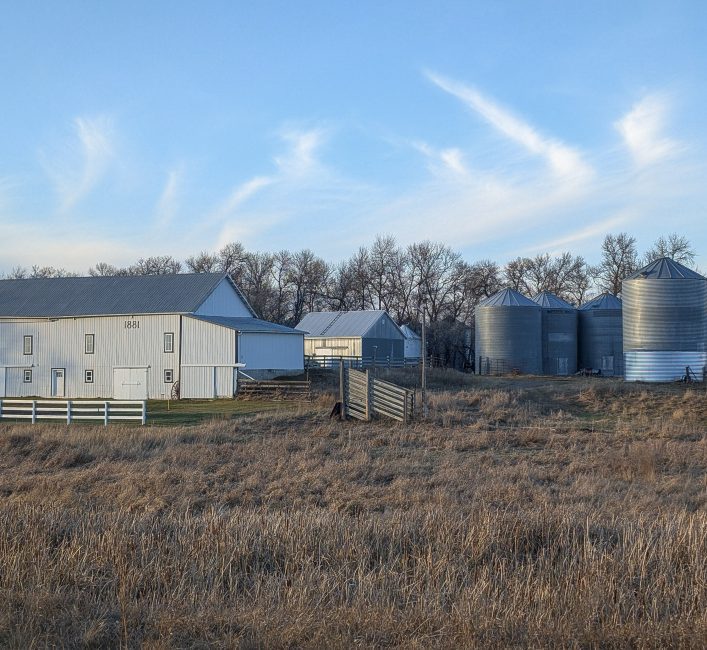
The big white barn on Jeff and Sheila Elder’s farmyard was built into the Wawanesa, Man. hillside in 1881 when Jeff’s ancestors, William and Julie Jackson, homesteaded the land.
If you step inside and look up, you’ll see marks left by William’s axe when he squared off the rafter beams.
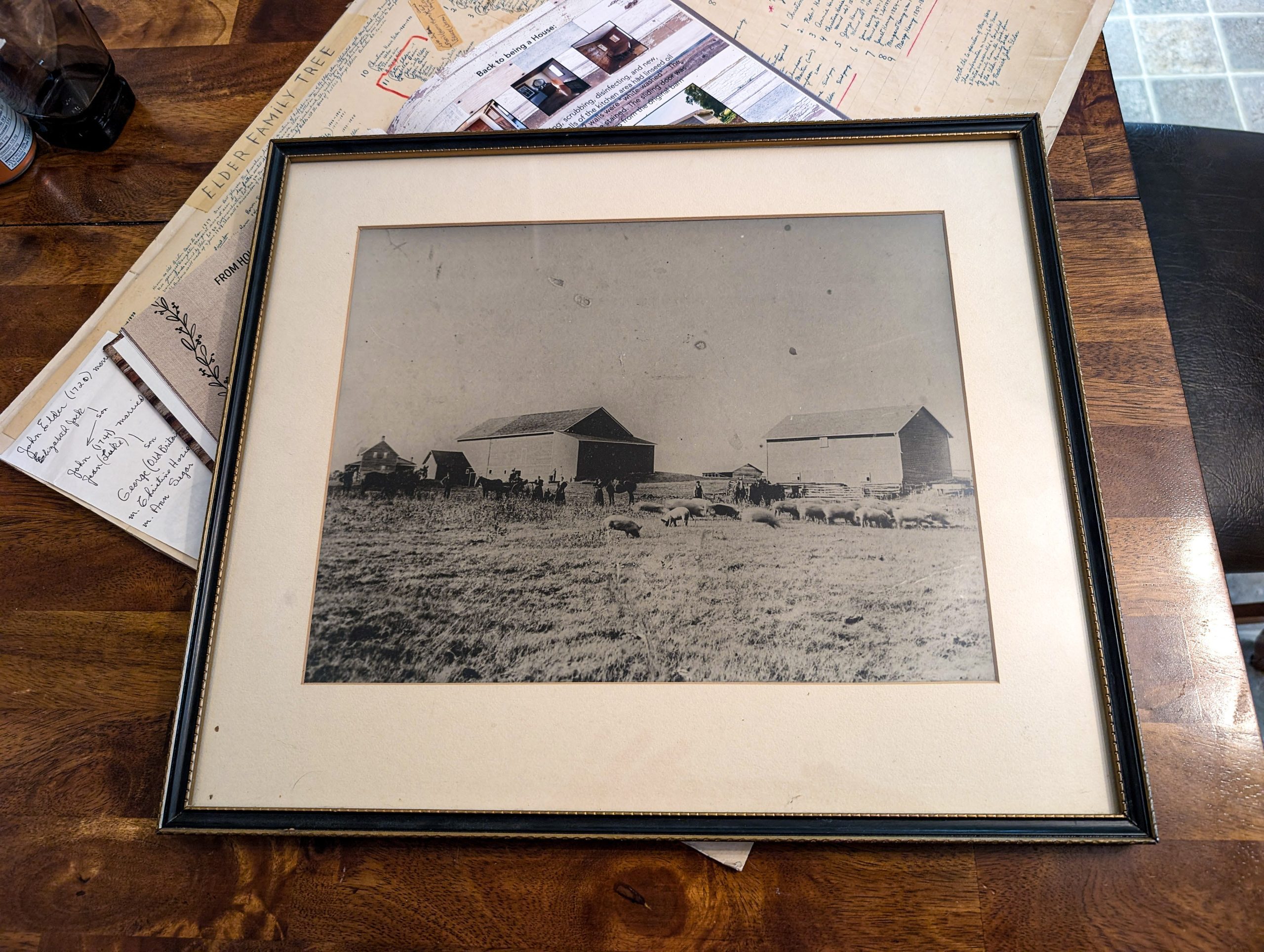
In an undated photo, Jeff’s ancestors pose with their buggy, horses and drove of pigs in the farmyard. That same barn is right behind them.
By 2018, the barn’s tamarack foundation was rotting away. Jeff and Sheila hired a construction firm to redo much of the foundation and set the barn on screw piles, at the cost of tens of thousands of dollars.
The bell, the barn, the farm records, pictures, journals and stories — they can be inconvenient, expensive and even painful to preserve. However, preserving farm history isn’t just about memorializing the family legacy; it may also be a firm foundation on which the farm can stand.
This is the first instalment in a two-part series exploring why farm families should consider finding ways to preserve their history — and how to do it.
Looking back to see how far we’ve come
Dave Allinson’s family ended up at their farm site, a few miles from Starbuck, Man., after his dad convinced his grandpa to move.
Grandpa William Allinson left his life as a coal miner in Manchester, England, in 1884. Two years later, he sent for his sons John, 17, and William, 12 (Dave’s father).
Grandpa and his boys built a simple shack on a swampy piece of land.
As they broke the land with a team of oxen, the mosquitos swarmed around man and beast. One day the oxen had enough and took off — plow and all — for the deepest part of the swamp. They sank their mosquito-bitten hides and the plow into the water.
After a few years, the younger William persuaded Grandpa to move to another slightly better drained section.
These types of stories about the sheer determination and toughness required to establish many farms across Canada are key parts of farm family history.
“I contend that a knowledge of history should make you grateful for what you have today,” says researcher and author Gordon Goldsborough. “You see how things were done fifty, a hundred years ago and you necessarily compare how those same tasks are completed today.”
Not only was the work more difficult and time-consuming for our great-grandparents, it was likely less safe.
“Some of us struggle more than others,” Goldsborough says. “But, by and large, compared to the way it was for our grandparents, our great-grandparents, our great-great-grandparents, nobody should complain.”
Seeing how ordinary folks survived and coped with challenges and everyday life over the years is a viewpoint not always afforded by history books, which often focus on kings, generals and policymakers.
“This contributes to our understanding of everyday life,” says historian Sarah Carter. “It’s really invaluable.”
Looking forward with common goals
Elaine Froese’s mother-in-law, Margaret, grew up under the thumb of a wicked stepmother. While her stepbrothers got silk shirts for Christmas, she would get rubber boots.
“Because of the wicked stepmother, she wanted to ensure that each of her daughters in their 30s got some kind of asset,” says Froese, who coaches farm families on communication, conflict resolution and farm transition.
Each of Margaret’s daughters received a piece of land when the farm transitioned, which they then had the choice to sell or rent to Froese and her husband, who continued to farm.
“It’s a happy story,” she says. “Land was transferred. Wealth was shared, and everybody felt seen and heard.”
Each farm family member has a history, a story they tell themselves — and that story affects how the farm moves on.
Van Camp says when planning for farm succession, one of the first steps is to build consensus among family members.
“To be able to do that, we have to understand where you came from,” she says. Sharing family history — for example, the story behind the bell in the farmyard — anchors the succession conversation in a shared understanding of family culture. This helps the family develop aligned goals.
To facilitate a shared family history approach, Loft32 developed a family farm legacy video project. Through a series of interviews and subsequent video production, Loft32 creates a short documentary on the farm’s history.
One interview question asks the outgoing generation what they hope the farm will look like in 10 years. The answer almost always incorporates what matters to the family, for example, that the family members are respected in the community or that the farm is progress-based.
As the family goes through the interview process and talks about their history, it often becomes clear that they’ve always had these core values, Van Camp says.
For example, they’re reminded that, “We are going to progress further. We’re going to innovate. We’re going to invest in the farm. We’re going to keep going when things get tough,” she says.
Family history can also facilitate conflict mediation, says Froese. She explains that when working with families in conflict, she’ll draw a family tree or map to work out the ages and life stages of the people involved. This often reveals the sources of conflict, for example, a 62-year-old farmer with a 40-year-old son who doesn’t own any part of the farm.
“I also find all kinds of farm men who became farm owners and the head guy by default when their dad was killed when they were 19,” Froese says.
These men, now nearing retirement age, are struggling as fathers because they didn’t really have one.
“All that story is informative to what some of the key challenges could be now.”
Should we talk about the hard stuff?
Froese says that the Irish have a saying: “Every front door looks beautiful.”
Her family was the Red River Exhibition’s farm family of the year in 1974. But behind the front door, she says the family was struggling with conflict and financial stress. “My parents did not engage in good advice.”
Froese says sometimes those hard stories need to be uncovered. In her family’s case, it meant discovering poor accounting practices and bad advisors.
“Unearthing hard stories that are conflictual may also redeem somebody in the family who’s not being treated well,” she says.
Talking about the bad times and the black spots may explain why some family members make the decisions and act like they do.
However, difficult stories should be approached with curiosity and clear intent.
Froese suggests saying something along the lines of “I’m very curious about this story that I uncovered that could be quite hurtful, but I need you to know it’s not my intent to cause harm…. I think it’s helpful to us understanding why we make the decisions the way we do.”
She suggests that the conversation could be framed by asking others involved if they want to delve into the story. If they say no, respect that boundary.
There are also some stories that may be better shared only after people have died, she adds.
Van Camp says that involving a compassionate third party may help. That person can act as a sounding board and gently ask the right questions.
History is perishable
Genealogist George Mackay teaches kids how to research their family trees. He says it’s good for students to know where they came from.
It’s also good for them to start the research while they’re young.
“You don’t really think of it until later,” he says. “Unfortunately, I waited ’til it was too late, and on my dad’s side, the questions that I really needed to ask or wanted to ask — everyone was gone.”
Obviously, the past can’t be erased, but the memory of it can. When the eldest family members die their stories die too, unless they’re recorded and remembered by others. And, depending on how the recording is done, both their faces and voices can be remembered along with their stories.
In part two of this series, we’ll explore how to get started researching family history and give some ideas on how to preserve memories, heirlooms and other pieces of family lore.