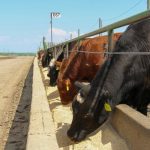


Chicago | Reuters — Chicago Mercantile Exchange live cattle futures fell to their lowest level since early August on Friday on fears of a global recession that could curb demand for commodities including beef, traders said.
CME October live cattle settled down 0.6 cent at 144.25 cents/lb. and the most-active December contract fell 0.8 cent to finish at 148.55 cents/lb., after dipping to 148.15 cents, the contract’s lowest since Aug. 2 (all figures US$).
Cattle and hog futures joined a broad sell-off in commodities and Wall Street equities tied to worries about the health of the world economy. The uncertainty comes at a time when commodity funds hold net long positions in CME live cattle and lean hog futures, leaving both markets vulnerable to bouts of long liquidation.
Read Also

Bayer takes its multi-front battle on pesticide liability to Kansas
Kansas lawmakers were set to take up a bill on Tuesday backed by Bayer that would prevent people from suing pesticide manufacturers for not warning them that their products could cause cancer or other illnesses.
A firmer U.S. dollar added pressure. The greenback touched two-decade highs this week, making U.S. goods less competitive globally.
“The equity markets being under pressure were negative for domestic (meat) demand, and the higher dollar was negative for the export demand. And that goes for both hogs and cattle,” said Don Roose, president of Iowa-based U.S. Commodities.
Still, feeder cattle futures bucked the weaker trend, closing higher on bargain-buying after a dip to a three-month low and falling prices for corn. CME November feeders settled up 0.2 cent at 178.25 cents/lb.
Hog futures tumbled along with live cattle, grains and energy futures. CME October lean hogs ended down 1.5 cents at 92.625 cents/lb. and benchmark December hogs fell 2.875 cents to settle at 82.8 cents/lb.
Traders await the U.S. Department of Agriculture’s Sept. 29 quarterly hogs and pigs report.
After Friday’s close, USDA reported the number of U.S. cattle on feed as of Sept. 1 at 11.279 million head, about 100 per cent of the year-ago total and in line with analyst expectations.
Cattle marketings during August were 106 per cent of a year ago, in line with trade estimates, while August placements were 100 per cent of a year ago, above the average analyst estimate of 97.3 per cent. Poor conditions on drought-hit grazing pastures encouraged the placement of cattle into feedlots, Roose said.
“The placements are bigger than people thought, but not enough to make a big difference. It’s the outside (financial) markets that are going to be the influence on Monday,” Roose said.
— Julie Ingwersen is a Reuters commodities correspondent in Chicago.