

Chicago | Reuters — Chicago soybean, corn and wheat futures ended a choppy session lower on Wednesday as signs of a thaw in the U.S.-China trade standoff supported agricultural markets, despite lingering concerns about demand and global competition, traders said.
Though a planned meeting between senior U.S. and Chinese officials boosted hopes for easing tensions earlier in the session, sentiment soured after U.S. President Donald Trump said he would not preemptively lower tariffs on China.
Plans for the meeting, after the recent absence of clear steps to de-escalate the tariff standoff, also helped support corn and wheat prices that have been pressured by improving U.S. crop weather.
Read Also

Spain alerts WHO of swine flu virus believed to have been transmitted between people
Spain has alerted the World Health Organization of what it believes to be a person-to-person transmission of the swine flu virus in its A(H1N1)v variant, a spokesperson for health authorities in the Catalonia region confirmed to Reuters on Friday.
“There’s a better tone now,” said Darin Fessler, hedge advisor at Lakefront Futures and Options.
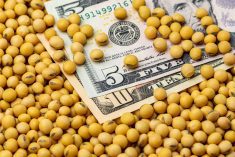
The soybean market has been particularly sensitive to the Sino-U.S. tariff battle, given China dominates global soybean imports, including a large portion of shipments from the United States, the world’s second-largest exporter of the oilseed.
The most-active soybean contract on the Chicago Board of Trade (CBOT) Sv1 fell 2 cents to $10.39-1/4 per bushel.
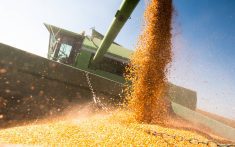
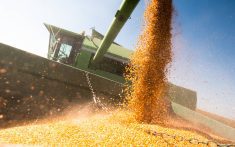
CBOT corn Cv1closed down 6-1/4 cents at $4.49-1/4 per bushel. CBOT wheat Wv1fell 1-3/4 cents to $5.34-1/4 a bushel.
Despite good demand for U.S. corn, favorable planting weather in the U.S. Midwest and the upcoming Brazilian corn harvest have pressured prices.
Dry weather in the U.S. corn and soy belts is expected to allow farmers to speedily seed their corn and soy crops.
The wheat market has drawn support from concerns about dryness in Henan, a major wheat-producing province in China. Reduced output there could spur more Chinese demand for wheat imports, but good weather in the U.S. wheat belt has put a lid on prices.
— Ella Cao and Lewis Jackson in Beijing and Gus Trompiz in Paris