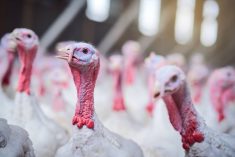

A Saskatchewan poultry farm quarantined for H7N3 avian flu since last September has been given the all-clear to bring new birds to the property.
The Canadian Food Inspection Agency said Monday that all cleaning and disinfection have been completed on the affected farm and all quarantine measures have been removed.
CFIA regulations allow quarantines to be lifted 21 days after all barns, vehicles, equipment and tools on an affected farm are cleaned and disinfected.
Assuming no further cases arise, Canada will be considered free of highly pathogenic avian flu, according to international guidelines, 90 days after cleaning and disinfection were complete. In this case, that date will be April 17, CFIA said in a statement on its web site.
Read Also
Klassen: Western Canadian feeder market incorporates risk discount
For the week ending March 7, Western Canadian feeder cattle markets traded $5-$10/cwt lower compared to seven days earlier. The…
Most other CFIA restrictions on the movement of other farms’ birds and bird products within and through Saskatchewan related to this case were lifted by the end of October.
The cleanup of the farm, in the Regina Beach/Lumsden area northwest of Regina, was funded in part by Saskatchewan’s poultry industry groups, who raised $100,000 as an ad-hoc measure to help with the “prohibitive” costs. The bills for cleanup and disinfection in such cases usually fall to the farmer.
Government programs compensate livestock producers for the market value of animals lost to “depopulation” — in this case, about 50,000 birds — as well as costs related to the culling and burial, but do not cover the cleanup needed to prevent further outbreaks.
“Shared responsibility”
“Ensuring that the infected premise is appropriately cleaned and disinfected is critical to ensuring confidence in both government and industry biosecurity systems, and should be a shared responsibility,” said Joy Smith, general manager of Saskatchewan Egg Producers, in a statement in December, calling on governments to support cleanup operations.
The highly pathogenic H7N3 virus, which sickened and killed some birds on the Regina Beach farm last September and led to the complete cull, affects birds but not people, and is not to be confused with H5N1, another “high-path” strain. H5N1 is blamed for the deaths of at least 225 people overseas since late 2003, largely through direct contact with infected birds.
The most recent confirmed human fatality from H5N1 was a 29-year-old Indonesian woman, who died Saturday, according to a Reuters report on Monday.
Health officials worldwide are tracking H5N1, citing fears it may mutate into a form that people can catch from other people, and thus spur a pandemic.