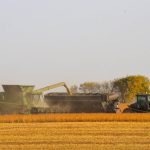


MarketsFarm — Manitoba’s sunflower crop has been compromised by the snow that fell over Thanksgiving weekend, but it’s not yet clear what percentage of the crop will be impacted.
Before the snow fell, windy and rainy weather took a toll on the sunflower crop. The soil was oversaturated to the point that sunflower roots couldn’t hold, and wind could knock the plants down.
“If the sunflower lays down, there’s no way to pick them up off the ground,” said Cody Burton of Nestibo Agra Commodity Processors at Deloraine.
Read Also
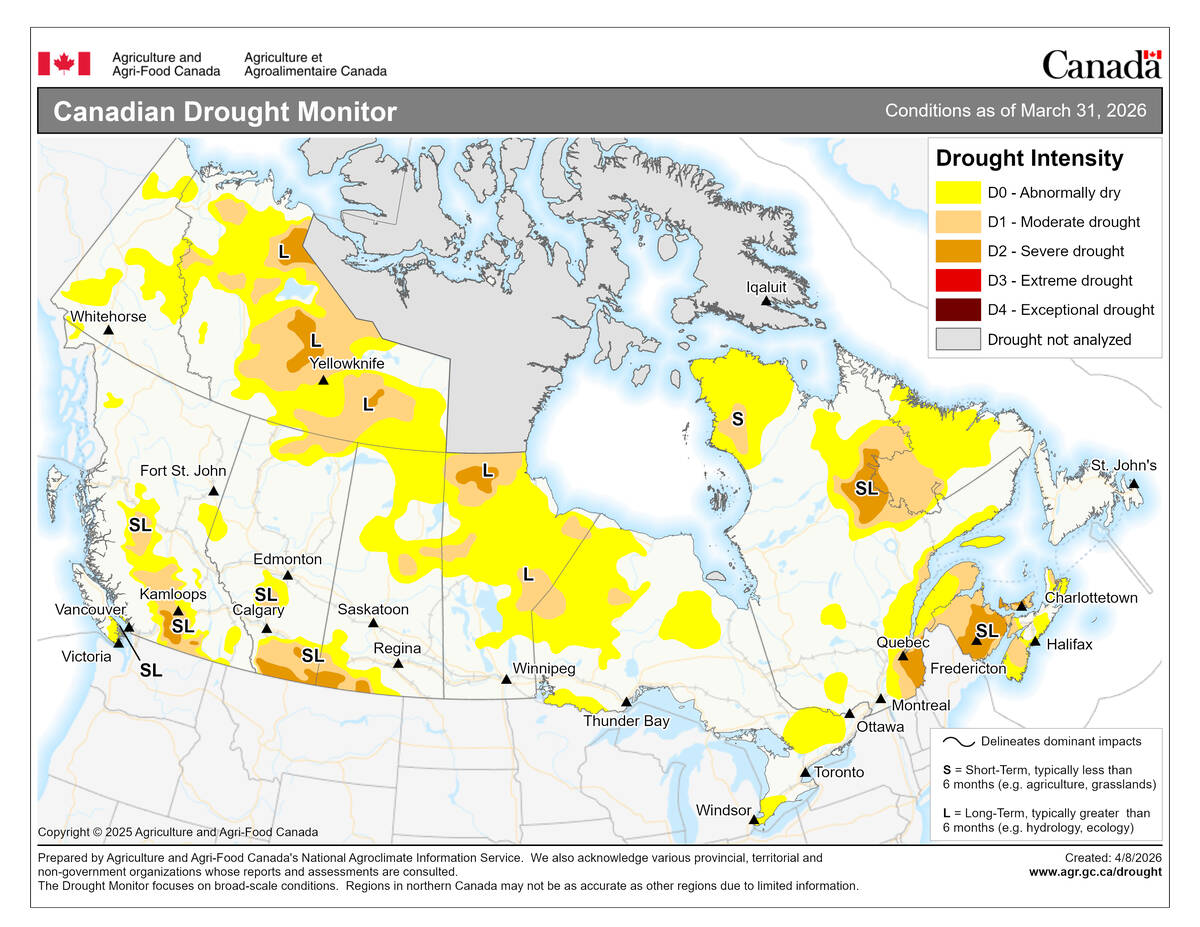
Canadian drought conditions improve in March
Normal to above normal precipitation in March helped moisture conditions improve across much of Canada, according to the latest Canadian Drought Monitor data from Agriculture and Agri-Food Canada
The extent to which the crop was damaged depends largely on what area the crop was in — and how much snow the area received.
“It was a wet, heavy snow, mixed with wind that really weighed on the sunflower head.”
Burton estimated 10 to 15 per cent of Manitoba’s sunflower crop may be lost due to the myriad of challenging late-season conditions.
According to Agriculture and Agri-Food Canada, about 56,000 acres of sunflowers were planted in 2019, with most of the crop grown in Manitoba.
Though sunflowers are typically harvested later in the fall, the inclement weather has further delayed harvest.
Most sunflower producers will start combining in about two weeks, but regions that received more rain may be off the fields for another month.
“You can’t get into the field because your combine will get stuck,” Burton said.
— Marlo Glass reports for MarketsFarm, a Glacier FarmMedia division specializing in grain and commodity market analysis and reporting.