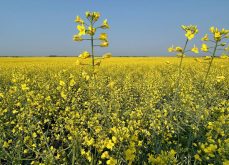

A fungicide that arrived in Canada last year for control of leaf diseases in pulse, cereal, corn and soy crops is now cleared to control sclerotinia in canola.
DuPont Crop Protection on Wednesday announced approval from Health Canada’s Pest Management Regulatory Agency (PMRA) for the expanded Canadian label on its Acapela fungicide, describing it as a “new-generation defense” against sclerotinia.
“Sclerotinia is one of the most economically damaging diseases of canola, potentially reducing yields by up to 50 per cent in extreme cases,” Todd Friday, DuPont’s pulse and oilseed market segment manager in Saskatoon, said in a release.
Read Also
Pulse Weekly: StatCan projects fewer pea and lentil acres
Statistics Canada projected fewer pea and lentil acres to be planted this spring in its initial 2026 planting estimates released on March 5.
“We believe that Acapela will quickly become a product of choice for canola growers,” he added. “And because Acapela has an excellent fit on greater than 90 per cent of crop acres in Western Canada, it will also be a mainstay for crop protection retailers.”
Picoxystrobin, DuPont’s active ingredient in Acapela, was first registered in 2012 in Canada for control of “key leaf diseases” in other crops, such as leaf rust, powdery mildew, septoria leaf blotch and tan spot in cereals, northern corn leaf blight and Asian soybean rust.
The fungicide, a Group 11 (strobilurin) product sold as a suspension concentrate at 250 grams per litre, “moves across, into and around the leaf to deliver strong preventative and residual activity,” the company said. — AGCanada.com Network
Related story:
New fungicide active cleared for crop leaf diseases, March 21, 2012