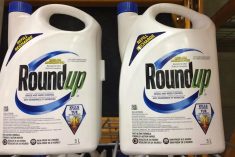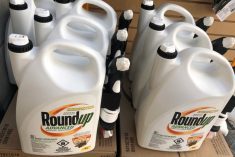


Brussels | Reuters — European Union governments failed on Friday to give a decisive opinion on a proposal to extend by 10 years EU approval for the use of glyphosate, the active ingredient in Bayer’s Roundup herbicide.
A “qualified majority” of 15 countries representing at least 65 per cent of the bloc’s population had been required either to support or to block the proposal.
The European Commission said in a statement there was no qualified majority either way in a vote by a committee of the EU’s 27 members.
Read Also

Canola, U.S. soybean crushes expanding
In calendar year 2025, the canola crushes in Canada and the United States remained above their respective five-year averages, Statistics Canada reported on March 13. While the U.S. soybean crush continued to expand, StatCan didn’t include any soybean crush data for 2025 due to confidentiality requirements under the Statistics Act.
EU governments will try again in the first half of November when another failure to produce a clear opinion would leave the decision with the European Commission.
A decision is needed by Dec. 14 as the current approval expires the following day.
The previous time glyphosate’s licence came up for re-approval, the EU gave it a five-year extension after EU countries twice failed to support a 10-year period.
The World Health Organization’s cancer research agency concluded in 2015 that glyphosate was probably carcinogenic to humans, but other agencies around the world, including the U.S. Environmental Protection Agency (EPA) and the European Chemicals Agency, have classified glyphosate as non-carcinogenic.
Bayer has said decades of studies have shown it is safe and the chemical has been widely used by farmers, or to clear weeds from railway lines for decades.
The company said on Friday that a clear majority of EU countries had voted in favour of the proposal and that it was hopeful sufficient additional countries would support it in the next step of the approval process.
France was among a number of countries that abstained.
French farm minister Marc Fesneau said it was not opposed to glyphosate per se, but opposed the Commission’s proposal, wanting instead to limit use of glyphosate to instances where there was no viable alternative.
Campaign group Pesticides Action Network says that there are serious question marks about the safety assessments and that the majority of citizens polled in six EU countries believe glyphosate should be banned.
— Reporting for Reuters by Philip Blenkinsop and Marine Strauss; additional reporting by Sybille de la Hamaide in Paris and Patricia Weiss in Frankfurt.