

Beijing | Reuters — China bought fewer goods from Canada last year for the first time since 2020, according to Chinese data released on the same day as Prime Minister Mark Carney starts his China visit, in a stark reminder of the economic leverage Beijing has over Ottawa.
WHY IT MATTERS: Foreign minister Anita Anand said talks so far on canola had been productive and would continue.
Chinese imports from Canada tumbled 10.4 per cent in 2025 to C$57.9 billion from an all-time high a year earlier, a scheduled monthly statistics release by China’s customs authority showed on Wednesday. The last time inbound shipments fell was in 2020, when the pandemic knocked down imports by a staggering 22.3 per cent.
Read Also

U.S. to seek more foreign tariff cuts, CUSMA improvements in 2026
The U.S. Trade Representative’s office said on Monday it will seek further reductions in foreign tariffs and non-tariff barriers this year, enforce its “reciprocal” trade deals and consider launching new unfair trade practices investigations.
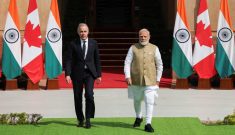
Mark Carney arrived in Beijing on Wednesday in the first visit to China by a Canadian prime minister since 2017.
Trip meant to heal rift
The trip is expected to focus on narrowing a years-long rift that widened in 2024 when former Prime Minister Justin Trudeau followed in the footsteps of the Biden administration and slapped 100 per cent tariffs on Chinese electric vehicles.
“China is our second-largest trading partner, and the world’s second largest economy. A pragmatic and constructive relationship between our nations will create greater stability, security, and prosperity on both sides of the Pacific,” Carney said on social media.
The visit follows a positive encounter with Chinese leader Xi Jinping in South Korea in October. While the meeting produced no breakthroughs, with Chinese tariffs still shutting out Canadian canola from its biggest market, both leaders agreed to advance bilateral ties.
Canadian Foreign Minister Anita Anand said talks on the canola issue had been productive and would continue.
“We will be exploring several opportunities for collaboration between the broader populations, in addition to examining the trade and economic relationship,” she told reporters in Beijing late on Wednesday, describing bilateral ties as “complex.”
Desire to diversify from U.S.
Re-engagement with China has also been driven by a desire to diversify export markets after U.S. President Donald Trump imposed tariffs on Canada last year and suggested that the longtime U.S. ally could become the 51st U.S. state.
Ahead of Carney’s visit, Chinese state media have been quick to remind Carney of Canada’s “strategic autonomy” from its southern neighbour.
“If the Canadian side reflects on the root causes of the setbacks in bilateral relations over the past few years – the previous Justin Trudeau government’s policies to contain China in lock step with the United States – it will realize that it can avoid the same outcome by upholding its strategic autonomy in handling China-related issues,” state-run China Daily wrote in an editorial.
Under Trudeau, Ottawa stressed concerns over human rights and accused China of interfering in Canadian domestic affairs, a charge Beijing consistently rejected.
“We will continue to have difficult conversations and discuss human rights issues … at the same time, we need to continue to build the Canadian economy and to do that, we will be at the table here,” said Anand.
Chinese imports from the United States in 2025 also slumped, down 14.6 per cent from a year earlier, according to the Chinese customs data released on Wednesday.