
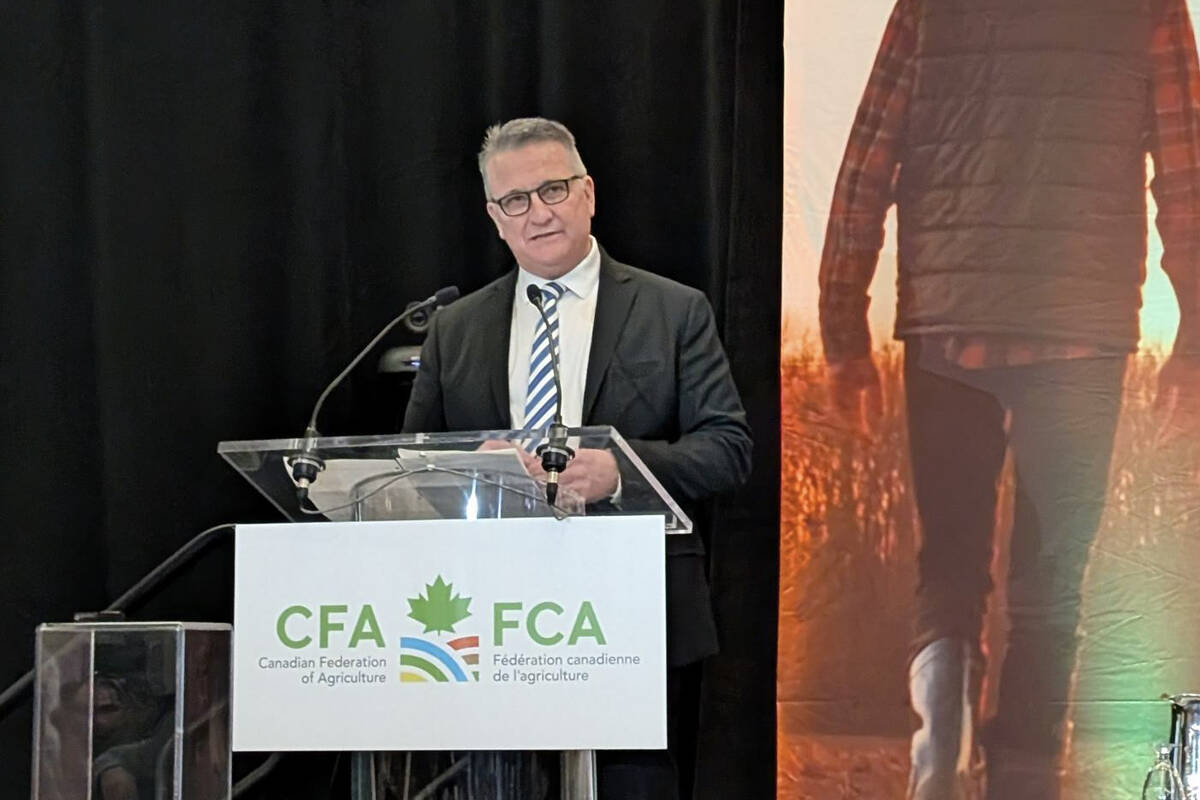
Labour, investment, research and red tape are among challenges the federal government and agriculture sector must address to increase productivity and competitiveness say federal politicians.
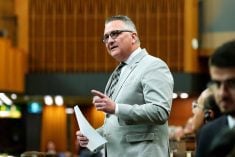
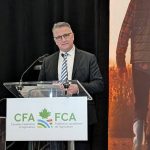
Minister of Agriculture and Agri-Food Heath MacDonald, Conservative shadow ag minister John Barlow and Bloc Québécois MP and agriculture committee vice-chair Sébastien Lemire each made appearances at the Canadian Federation of Agriculture’s AGM, which ran Feb. 24-25 in Ottawa.
The theme of the meeting was Let’s Grow Canada: Building the Future of Canadian Agriculture.
Read Also
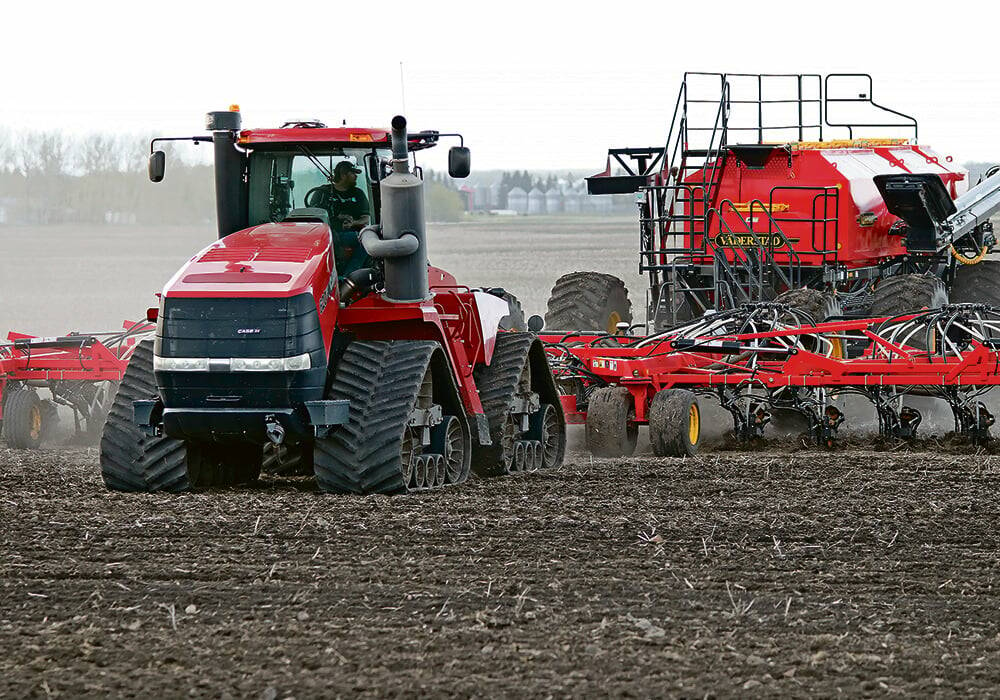
More canola, spring wheat likely to be seeded this spring
As spring planting approaches, farmers are busy planning which crops to seed this year and how much. With that, market thoughts have turned toward planted area projections, as Statistics Canada is set to issue its report on Thursday.
Agriculture minister says future policy will engage farmers
MacDonald said Canadian agriculture is set up for success, but getting there could be a challenge.
“Productivity has been steadily declining in recent years, and the sector has struggled to attract the right mix of talent and maintain the level of investment in (research and development) as required to remain a global leader,” he said.
“Addressing these challenges as the sector undergoes a generational shift is not only essential to strengthening the resilience and (competitiveness) of Canadian agriculture, but also for advancing the country’s broader growth ambitions and economies.”
He also spoke about the recently announced Next Policy Framework, which will succeed the current Sustainable Canadian Agriculture Partnership. This will act as one of the mechanisms to set the next generation of farmers up for success, he said.
MacDonald said the government must be a leader, but can’t fill that role without industry stakeholders by its side.
He also addressed what he referred to as the “white elephant in the room,” the recent staff cuts at AAFC and closure of research sites. These have drawn significant criticism from the agriculture sector.
“We can’t go forward with all these achievements that we want to make if we don’t have appropriate science,” he said. “Science builds on our capacity. It helps our farmers and ranchers on a daily basis.”
“It’s not easy in this job, when you’re asked to cut 15 per cent of your budget and you’re thinking, ‘I’m not cutting programs (at the farm gate), so what do we have to do?’
“We’re not cutting science,” MacDonald said. “We’re cutting facilities.”
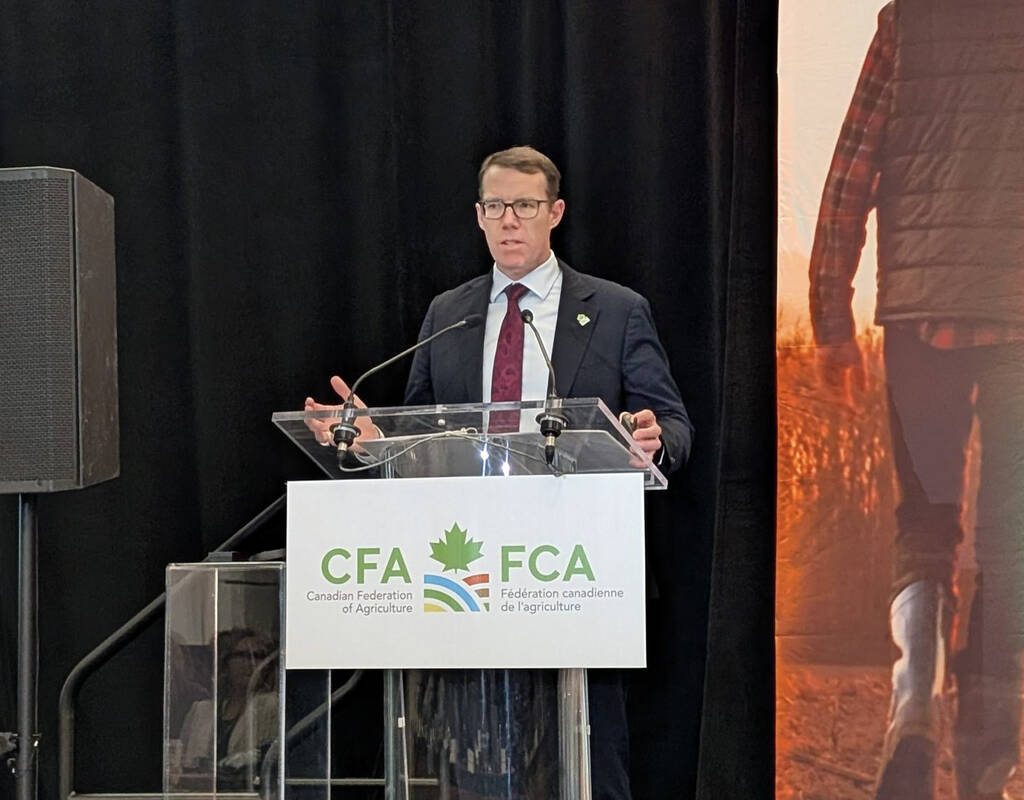
John Barlow: Let’s Grow Canada
Barlow began by praising the production, sustainability and growth capacity of Canadian producers, in line with the conference’s theme. He also said there is room for the sector to improve and continue to grow.
“We are now number nine in the world in terms of food production and food exports,” Barlow said.
“Now, many times, (we say) yeah, like the Olympics, we’re in the top 10,” he continued, “but I want to be the hockey team. I want to be in the top three. I want to be on the podium. We were number five not that long ago.”
Barlow said before last year’s federal election, he consulted agriculture leaders and asked them for their priorities for the sector. He narrowed it down to several items, including a culture shift in agencies like the Canadian Food Inspection Agency and Pest Management Regulatory Agency, reducing red tape and prioritizing research and innovation.
“We have not given up on trying to reach and address those priorities that you in this room put forward,” Barlow said.
“I’m not naïve,” he continued. “I’m pretty sure you shared those same priorities with my Liberal colleagues.”
He criticized the government for maintaining red tape and for its cuts to research and innovation.
“We cannot keep going in this direction,” he said. “Otherwise, we go from number five to number nine. That number is going to continue to decline.”
He pointed to statistics suggesting the agriculture sector’s growth has slowed from 2 per cent to 1 per cent over the last decade.
“We have these opportunities, but we keep missing these opportunities.”
Barlow closed by speaking directly to the AGM’s theme.
“Let’s grow Canada. I couldn’t agree more. Let’s grow it by backing the men and women who have built this industry, men and women who grow our food and produce our commodities.”
“Let’s grow Canada by harmonizing regulation, eliminating red tape and taxes to make you economically competitive,” he said. “Let’s grow Canada by assuring that our farmers and producers have access to the same tools as their competitors and our allies around the world.”
“Let’s also grow Canada by ensuring that you have a government that has your back and is listening to your priorities.”
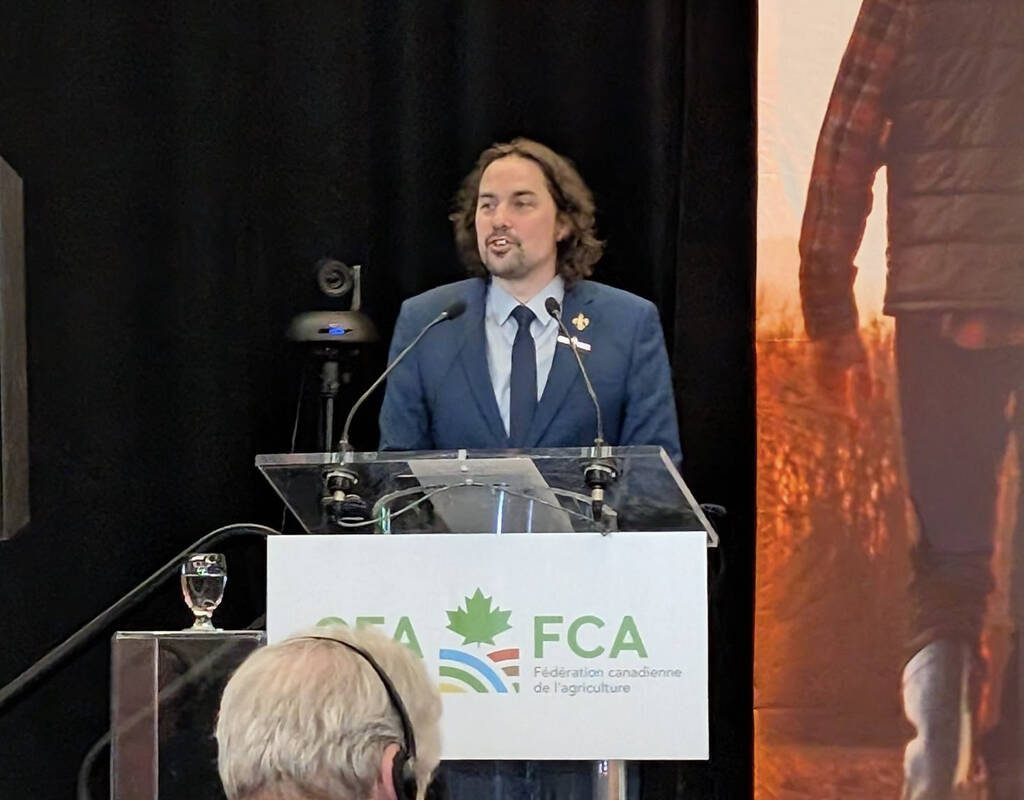
Sébastien Lemire: Agriculture is Defense
Speaking in French, Lemire said he had an early interest in making an agriculture a part of his mandate as an MP, even if he was not working directly on the file.
Lemire represents the Northern Quebec riding of Abitibi-Témiscamingue. Despite its northern location, the area is still home to considerable agricultural production.
Lemire said he was interested in changing the narrative of his riding as a forested northern area and emphasizing its production.
He also spoke to the importance of agriculture as a strategic asset.
“To me, food sovereignty is a fundamental notion,” he said in French. “If we want to protect our population, it happens with agriculture.”
He said agriculture could serve as an element of national defense and questioned the government’s funding of defense efforts over agricultural production.