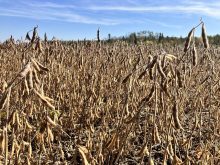


Sao Paulo | Reuters — Soybean seed piracy in Brazil generates losses of 10 billion reais ($1.76 billion or C$2.51 billion) per year in the country, according to a study by CropLife Brasil and agribusiness consultancy Celeres Consultoria released on Wednesday.
The findings of the study in Brazil, the world’s largest producer and exporter of soybeans, underscore the challenges faced by seed, chemical and biotechnology companies doing business there.
Why it matters: Payment for seeds helps fund development of new and more advanced varieties, which aids farmers in growing more productive crops.
Read Also

Trump tells farmers that tractor companies should lower prices
U.S. President Donald Trump announced new measures on Friday to support U.S. farmers who are reeling from the administration’s trade policies and the Iran war and suggested farm equipment makers cut prices
The country, which competes with the United States and Argentina in world markets, sells most of its soybeans for processing in China.
Pirated soybean seeds occupy 11 per cent of the area sowed with soybeans in Brazil, the study found after looking at planting data for the 2023/24 season. At that point, the total area planted with soy was 46.15 million hectares (114.039 million acres), data from national crop agency Conab shows.
The nation’s soy area in the 2024/2025 season is 47.45 million hectares (117.25 million acres).
Approximately 1 billion reais could be lost in taxes over the next 10 years due to seed piracy, the survey estimates. Also, combating seed piracy could contribute to increasing investments to improve seed varieties by 900 million reais over the next decade, according to the study.
Croplife represents seeds companies, biotechnology firms and pesticides and bioinput producers.