


Future farmland values will affect your balance sheet and your ability to refinance and execute business decisions.
So, I’m surprised that future farmland values aren’t discussed more between farmers and lenders. The reason is likely because these values are speculative. Lenders deal with enough risk; they need to bank on what certainty they can.
And anyone who knows for sure what farmland values will do should have moved to Vegas a long time ago.
Read Also
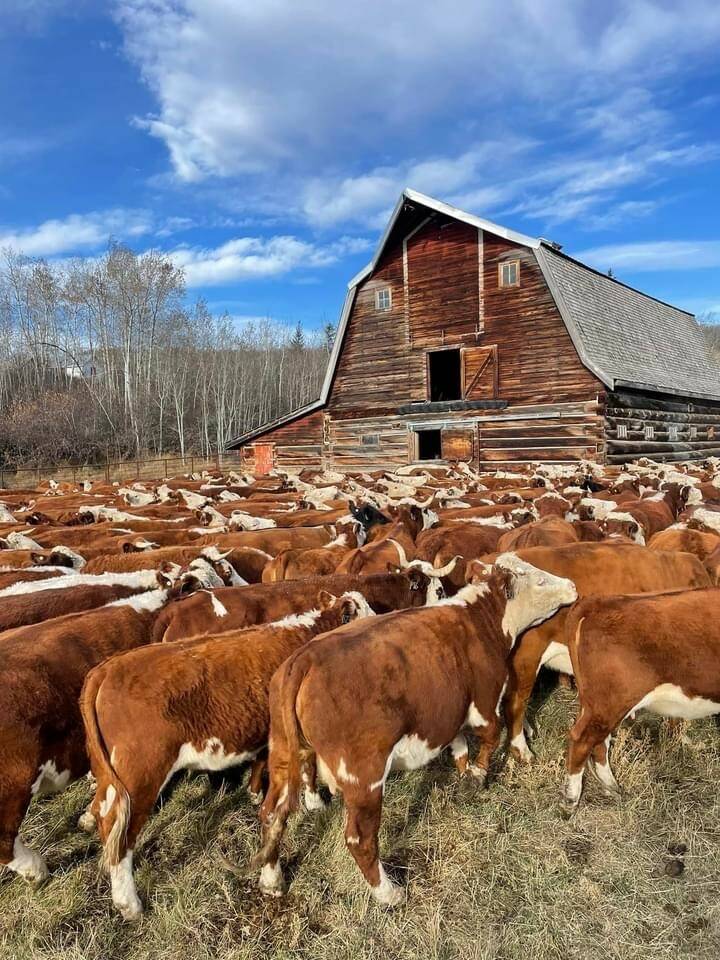
B.C. Century Farm focuses on protection and quality of their herd
Despite numerous challeges past and present, this B.C. ranch focuses on what’s within their control to face industry headwinds.
A farm that can service its debt and show healthy farmland asset appreciation is attractive to a lender. Remove one of those two variables and you begin to see the banker’s dilemma. For example, perhaps a farm can service debt but lacks sufficient farmland equity as security. Or the operation shows a healthy net worth on paper but can’t cover its loan payments in the current environment.
I first noticed that nobody was putting down payments on farmland when I worked in public accounting in Saskatchewan. All farmland deals were 100 per cent financed.
Forget the standard 20 per cent down on home mortgages; it was rare to see any down payment on farmland at all. The reason is that many of the operations purchasing farmland have grain in their bins and are already carrying operating debt balances.
Instead, financial institutions would lend against an ever-increasing equity base while ensuring adequate working capital and debt servicing capabilities were in place.
And, no, Chinese investors aren’t driving up the price of farmland. The drivers of farmland price appreciation are still farmers. Farmers reinvest “good times” profit in more farmland.
I’ve also noticed that after selling their farm some people will turn around and buy other farmland. They often do this to offset capital gains. It’s an asset class they know, and which has a good recent track record of returns.
According to the Historic Farm Credit Canada Farmland Values Report 1986-2024, Canadian farmland has averaged an 8.3 per cent annual return over the past 30 years.
Some say the run can’t go on forever, and yet we’ve been hearing that for the past 15 years.
Yes, you can farm without owning land, but it’s my opinion that farmers should own at least some of their land to build wealth and to have some equity if they need to refinance when times get tough. If farmers keep buying, we’re likely to continue to see positive appreciation.
Positive appreciation
If you expect farmland appreciation to continue, you are likely trying to buy as much farmland as possible. You may also be expecting future drops in interest rates, which will make debt servicing less expensive and make it easier to qualify for additional credit.
You may believe the uses of farmland for food, feed, fibre and fuel will continue to grow. You may be particularly bullish on biofuel policy.
But what happens when farmers quit buying?
Farmland depreciation
If you expect farmland to flatline or depreciate in the near term you may be considering selling your farm. You certainly aren’t looking to buy. You likely also expect interest rates to go up.
You may expect the combination of government policy, including trade risks, to be a bearish factor.
You might believe competition from Australia, Russia and South America will further pressure commodity prices.
You might also believe that government financial support will decline. Currently, the Canadian government guarantees $1.5 million for a house purchase through the Canadian Mortgage Housing Corporation but only $500,000 for a purchase towards farmland through the Canadian Agricultural Loans Act.
What does the future hold?
What will Canadian farmland ownership look like in 10 years?
If we assume the average appreciation rate from the past 30 years, it will be more expensive. A piece of farmland worth $1 million today will be worth almost $1.5 million in 10 years’ time using an annual appreciation rate of four per cent.
At three per cent annual farmland appreciation, you will double your farmland investment over 24 years.
If the Bank of Canada is targeting inflation in the two to three per cent range, will farmland values rise at the minimum rate as well? Not necessarily. Farmland prices are mostly driven by farmers. If farmers see a path to produce positive financial returns, then demand and values will continue to rise. However, if farmers see a future where the financial environment, government policies and weather risks aren’t worth the reward, then we can expect farmland values to depreciate or flatline. CG