

This past October, Canadian Peter Howitt (McGill University) and his research collaborators, Philippe Aghion (Collège de France) and Joel Mokyr (Northwestern University), received the Nobel prize in economics.
Their work on innovation-driven economic growth — or more excitingly worded “the theory of creative destruction” — demonstrates how new technologies can simultaneously boost economic productivity but also disrupt existing markets. This concurrent meet-up of old and new causes older businesses and processes to be displaced but can make room for newer productive and profitable methods — meaning that innovations that move us forward can be simultaneously sweet and sour.
We’ve seen creative destruction happen over the last century on Canadian farms. Innovative technologies have changed how agriculture is carried out in the field, the barn and the home office. A farm is a dynamic environment where things are in an almost constant state of flux. Old ways make room for new ways that are meant to increase productivity, efficiency and profitability. To create new and better processes often means necessarily destroying and re-jigging current ones.
Read Also
‘No agenda, no attenda’: How to professionalize your family farm meetings
Establishing meeting ground rules can help a farm family find ways to communicate that work for the business and the family.
And Country Guide is ready for its next iteration as well.
As you read about in the Subscriber Alert, we’re moving to the pages of our sister publications, The Western Producer and Farmtario.
As many readers know, the arrival of the internet provoked print media to change over the past few decades. Like your farm, Country Guide has always focused on the aspects that ensure its value, relevancy and growth. And like your farm, we’ve had to change and “modernize” a few times before.
Similar to previous shifts, we’re not looking at this one as pure “destruction.” Quite the contrary. Like the articles in this month’s Tech Issue — and not unlike farms across the country — we’ve got the future in mind. We’re busy creating what’s next to ensure a legacy. Since its inception 140 years ago, Country Guide has gone through several phases of creative destruction — and we’re pretty sure this won’t be its last.
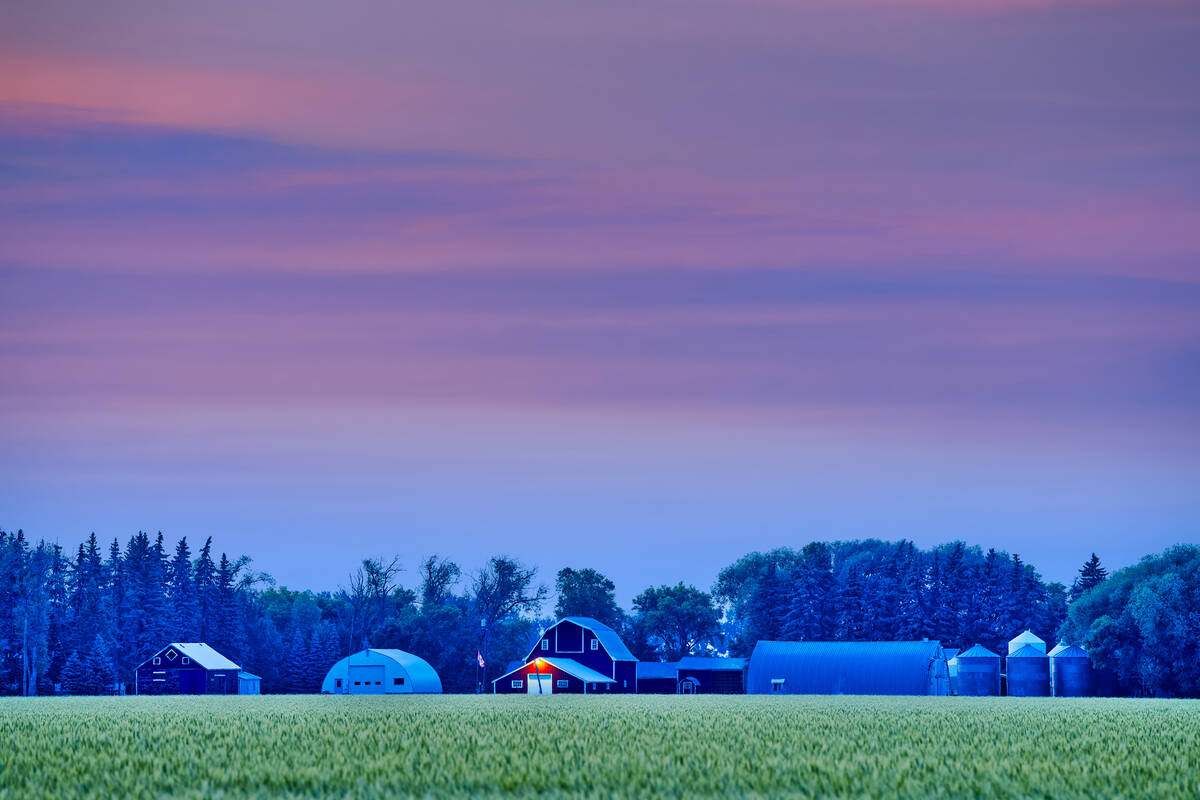
If you’ll pause for a moment to reflect on this month’s cover image, you’ll see that it was a deliberate choice for this last stand-alone issue of Country Guide. Because what is the future without acknowledging and innovating on our best of the best in the past? What is the past without planning for how to make the future better? In the process of creation there will always be some destruction, but the best efforts aim for a balanced result.
I’ll see you soon over in The Western Producer and Farmtario. I hope you’ll come along, because we’ve still got lots of great business management content and farmer stories to share in 2026. And you can still enjoy regular Country Guide content on our usual social media channels and in our weekly newsletter. (Follow us on Facebook, X, Instagram and LinkedIn.)
So, let’s keep driving those important farm business conversations forward because this industry is nothing if not brim-full of creative destruction possibilities.