
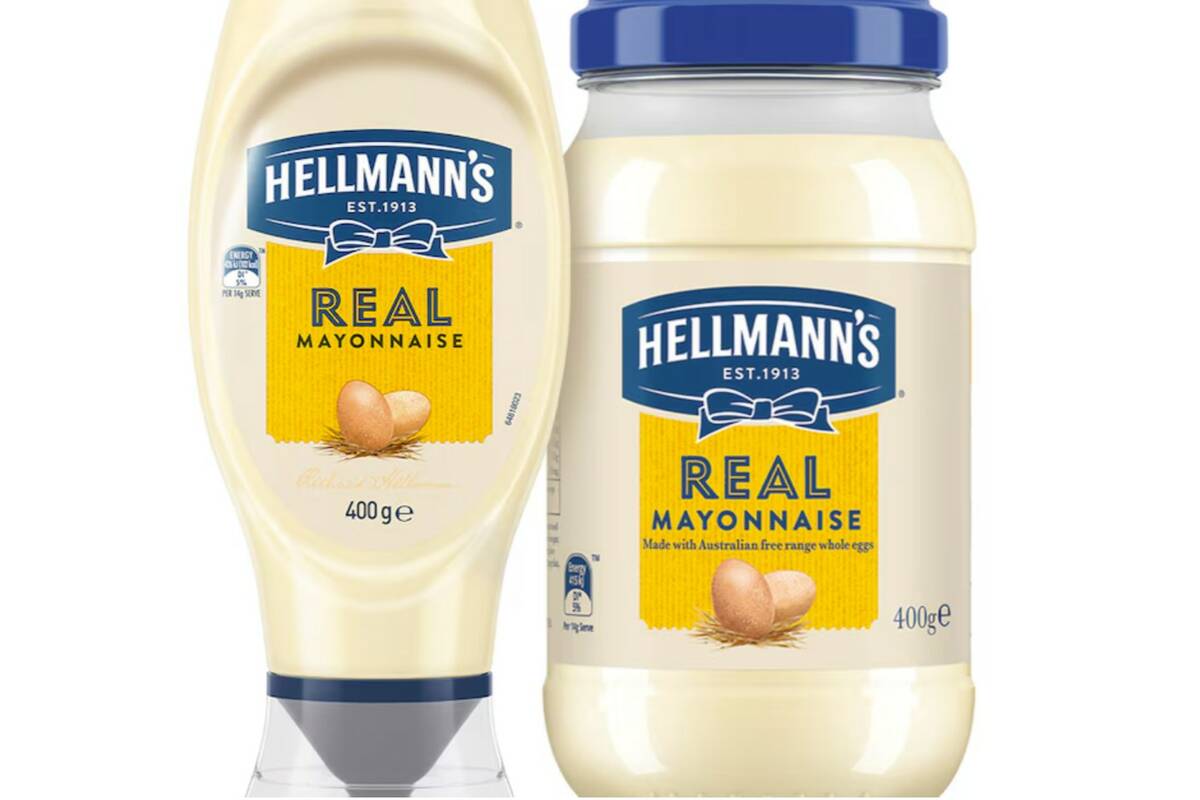
McCormick’s merger with Unilever’s food business to create a US$65 billion sauce-and-spice giant is a bet that access to rising global demand for flavor-rich, healthier food can help counter a maturing U.S. market.
Shares of Hellmann’s mayonnaise owner Unilever and Frank’s RedHot sauce maker McCormick fell on Tuesday following the announcement over concerns about the transaction’s structure, long path to closing and antitrust risks.
Read Also

Non-canola interest free limit set at $250,000 for 2026 Advance Payments Program
The interest-free limit for non-canola advances under the federally-funded Advance Payments Program in 2026 is set at $250,000.
The top U.S. spice maker, home to more than 30 household brands, is playing the long game, some analysts said.
While many food companies are scrambling to reformulate products and resize portions as the surging popularity of GLP-1 weight-loss drugs reshapes eating habits, McCormick argues that flavor will remain essential even as calorie counts fall.
“We will continue to flavor calories while others compete for them,” McCormick CEO Brendan Foley, a packaged-food industry veteran, said on a call with investors on Tuesday.
“As consumers increasingly focus on cooking at home, adding more protein and produce, and pursuing healthier lifestyles, flavor plays a critical role in elevating those choices,” Foley said.
The GLP-1 bet
The surge in weight-loss drug use has consumers craving more flavor in their food, leading to condiment and spice makers benefiting and attracting more interest in the M&A marketplace, dealmakers have said.
“Consumers shifting away from fatty, greasy, or overly sweet foods … creates a massive opportunity for flavor enhancers (spices and hot sauces) that provide sensory satisfaction without adding calories,” said Timothy Malefyt, professor of marketing at the Gabelli School of Business at Fordham University.
The deal will also help the U.S. company tap into Knorr stock cubes maker Unilever’s global scale and expertise, executives said on Tuesday’s investor call. Unilever executives highlighted its popular flavors such as Asian and Chinese.
“McCormick with this could be well-positioned to create the right nutritional functional benefit in food that is lacking in America right now,” said Mike Anstey, founder of Pilot Lite, a global CPG (consumer packaged goods) commercialization partner.
It would also open up key emerging markets such as Brazil, China and countries across Europe, the Middle East and Africa (EMEA).
“(The deal) represents a step-change in scale, broadening MKC’s exposure to faster-growing emerging markets and expanding opportunities for its foodservice platform,” Jefferies analyst Scott Marks said in a note.
Unkind market conditions
McCormick is seeking new markets and flavors against the backdrop of a tough U.S. market, where consumers are eating healthier and also looking for cheaper pantry alternatives and smaller pack sizes to stretch budgets hit by inflation.
“We’re certainly aware of the near-term pressures facing not just the food industry but broadly … the conflict in the Middle East and the broader CPG space. However, we continue to believe in just the long-term fundamentals that really underpin the confidence in this combination,” McCormick’s Foley said.
The company’s total volume growth has slowed over the last year, and was down 0.7 per cent in the most recently reported quarter, falling across both its consumer brands and flavor solutions segments.
“Despite the combination’s strategic merits, we think this may be a ploy to incite growth in an industry where gains have stagnated,” said Erin Lash, analyst at Morningstar Research.
Rival Kraft Heinz, which media reports said had explored a bid for Unilever’s food business, underscored the tougher U.S. market when it paused plans for a split.
“Investors should look at this transaction more optimistically than broken deals like Kraft Heinz because it creates value through greater depth in a single category, flavorings, rather than diversification,” said TD Cowen analyst Robert Moskow in a note.