
UPDATED: 14:50 CST
Three Agriculture Agri-Food Canada research and development centres and four satellite research farms will close, the federal government has confirmed Friday.
Research and development centres at Guelph, Ont., Quebec City, Que., and Lacombe, Alta., will close, an AAFC spokesperson said in a statement on Friday afternoon.
Read Also
Bayer takes its multi-front battle on pesticide liability to Kansas
Kansas lawmakers were set to take up a bill on Tuesday backed by Bayer that would prevent people from suing pesticide manufacturers for not warning them that their products could cause cancer or other illnesses.
Satellite research farms at Nappan, N.S., Scott, Sask., Indian Head, Sask. and Portage la Prairie, Man., will also close.
The announcement comes after Thursday’s news that 665 AAFC jobs were to be cut.
“Like other federal departments, Agriculture and Agri-Food Canada (AAFC) has identified savings over three years while remaining focused on its core mandate,” AAFC said.
“AAFC will remain Canada’s largest agricultural research organization, with 17 research centres nationwide and research farmland in every province. There are no imminent site closures, and any wind-down of scientific operations would follow a careful decision process that could take up to 12 months. Many employees may be retained, reassigned, or relocated. It is too early to determine final workforce impacts.”
Restructuring Canada’s agriculture research landscape
The organic and regenerative agriculture research program led by Myriam Fernandez at the Swift Current Research and Development Centre is among those cut.
Fernandez has been working on low input agriculture research for about 25 years and some plots at the centre were organic for the last 19 years. SaskOrganics said the loss would have a significant impact on the sector’s ability to conduct research because it doesn’t have a lot of financial support.
Cuts to Agriculture and Agri-Food Canada (AAFC) could be a step toward restructuring Canada’s agriculture research landscape, according to national stakeholders.
Keith Currie, President of the Canadian Federation of Agriculture (CFA) called the cutbacks a “necessary evil” and said Minister of Agriculture and Agri-Food Heath MacDonald and Deputy Minister Lawrence Hanson have their “fingers on the pulse of the ministry.”
“There’s nothing wrong with efficiencies,” Currie said. “And if … there were hirings that didn’t make sense, taking a look at it and getting leaner and meaner, I think that’s what we do in business. That’s what you do on our farms.”
He added there have been jobs added in the last decade that some producers have “kind of scratched our head at.”
“Having said that, it depends where these cuts are going to happen,” he continued. “We’ve been clamoring for probably 10, 15 years about not enough public sector research.”

Tyler McCann, Managing Director of the Canadian Agri-Food Policy Institute (CAPI) said the cutbacks, particularly the reported closures of research sites, were a predictable development.
“(AAFC) has, for decades now, not been investing in its infrastructure,” he said. “It has not been keeping up the investments it needed to make to maintain quality modern research infrastructure.”
“It is inevitable, if you don’t invest, that at a certain point in time you will need to start to close facilities. And that appears to be where we’re at today.”
He added politicians were likely responding to the signals from the broader agriculture community, which he said has not always championed science and research among other issues like trade and business risk management.
“Hopefully this reminds everyone else in the ag ecosystem that research and development and innovation is critical to competitiveness, and we need to double down on making that a priority going forward.”
McCann said an upside of the cuts is that they could provide an opportunity for a renewal point in agriculture research in Canada.
“Hopefully Agriculture Canada will start to show some leadership on this and engage with the other stakeholders who have significant skin in the game, other R&D funders, other R&D performers, in what that renewal looks like.”
It could be a chance for the AAFC to do more with less. McCann said there is an argument to be made that the department “had too broad of a research footprint for the research funding envelope that they had.”
“What will determine whether or not we can be competitive at a time of cuts is whether or not they’re going to make other changes to how they fund and do research to streamline and improve the efficiency of the work that they do.”
Currie and McCann both said it would be important to keep on those with roles to play in the recently announced Next Policy Framework, which will cover the 2028-33 period.
“That is a real opportunity for governments and the stakeholder community around them to double down on innovation and to say, yes, we know that (AAFC) shrank its footprint, but in the Next Policy Framework, for the next five years, governments are going to commit more resources and more energy and more focus to innovation,” McCann said.
Currie also pointed to the agriculture trade file and the temporary foreign worker/seasonal agriculture worker programs as areas he hoped would remain steady.
Competitiveness, productivity implications
University of Saskatchewan agricultural economist Richard Gray said the loss of research programs is concerning.
Public research cost-benefit returns are 35:1 in wheat alone, he said. Other countries that have cut public research in favour of private funding have seen productivity gains decline.
Gray added he hopes the government has a new funding model in mind since the cuts don’t fit with the growth model currently touted by prime minister Mark Carney.
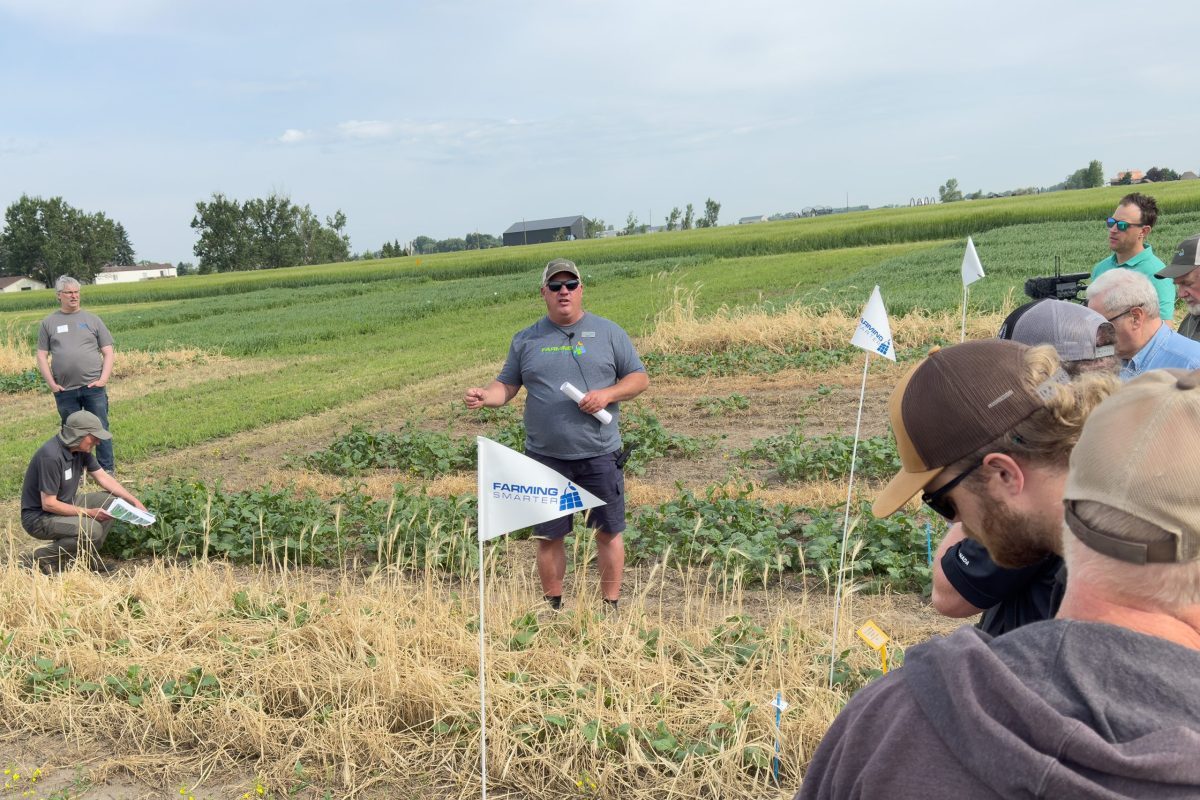
“I think it’s a shame and disgrace that we’re not, as a country, supporting one of the foundations of our country in an appropriate manner that will keep the industry competitive and vibrant on the world stage,” said Ken Coles, executive director of Lethbridge-based research and innovation group Farming Smarter.
Coles said this was a problem with leadership in general, and basically underestimating the importance of agriculture to a country.
He said investment has slumped from provincial and private angles as well.
“Our agricultural innovation system is a complete HR crisis. I don’t think we have the human capital to deal with any challenges that we might be facing in the future, and we certainly won’t be able to take advantage of any opportunities and innovation,” Coles said.
“It’s been a critical loss in capacity that allowed us to do great things in agriculture. I think we no longer have it.”
Coles said it’s difficult for his organization to hire scientists with the right skills. They instead have to be trained “from the ground up.”
“Everybody’s excited and sold these grand new ideas of new technologies solving things. But you still hear the same message that we’re failing at adopting and commercializing innovation,” Coles said.
“All the innovation is on this public entrepreneur piece, and they don’t know how to add value in agriculture. It goes well beyond just this layoff. It’s another blow to breaking the innovation system in agriculture across the country.”
There’s an insidious aspect to cutting research, said Reynold Bergen, science director at the Beef Cattle Research Council.
“It’s like a really long hose. Think of water running out of a long hose, and you shut the tap off and water keeps running until it doesn’t,” he said.
“We may not see impact right away from a production perspective, but the impact will come, they’ll show up.”
One way to predict the impact is to look at past benefits of forage, beef and cattle research from AAFC, Bergen said.
“If you think of some of the things that have come out, where would you be without them? So where would you be without new varieties? Where would you be without extended grazing? Where would you be without good controls on food safety? Where would you be without a good grading system? Those are the kind of impacts that we will see down the line.
Industry reacts
The Canadian Wheat Research Coalition said the staff cuts and resulting impacts are a tremendous loss for the industry.
“It is a loss of not only expertise and people who have contributed to farmers’ success, but also of agricultural research capacity that is crucial to fueling innovation and maintaining progress throughout the industry,” said chair Jocelyn Velestuk in a news release.
The CWRC was already reviewing Canada’s wheat breeding innovation system and said this is even more vital now. It said long-term impacts aren’t yet clear.
Manitoba-based producer group Keystone Agricultural Producers was attempting to parse out the implications of closures in an interview prior to the AAFC statement confirming closures.
General manager Colin Hornby said his first concern was how this would affect farmers.
“We want to make sure that there’s no funding cuts that negatively impact the services programs or whatever value it is that producers get from AAFC,” he said.
Hypothetically, Hornby said, mass shutdowns of research centres and layoffs would impact the science-based tools KAP needs, but it’s difficult to know for sure until more details are made available.
“I’m just trying to wrap my head around what type of roles they are eliminating. Is it field research stations? Is it people in Ottawa?” Hornby said. “We’re all piecing it together from different parts.”
Lancome-area MP, MLA “deeply upset”
“We are deeply upset that this federal Liberal government has decided to shut down the agriculture research station in Lacombe,” said Blaine Calkins, MP for Ponoka-Didsbury and Jennifer Johnson, MLA for Lancombe-Ponoka in a joint statement posted on X.
Calkins and Johnson listed advancements in meat science and plant science, including in forage and pasture production, as key contributions made by researchers at the Lancombe centre.
“A trailblazing organization in our community for 119-years, now closing because of this governments’ radical anti-rural agenda.”
-With files from Jonah Grignon, Jeff Melchior, Alexis Kienlen, Karen Briere and Geralyn Wichers