
Brussels | Reuters — EU states gave a provisional go-ahead on Friday for the bloc to sign its largest ever free trade accord with South American group Mercosur, more than 25 years since talks began and after months of wrangling to secure enough backers.
With U.S. President Donald Trump determined to shake up global trade, the European Commission and countries such as Germany and Spain argue the deal will help offset business lost from U.S. tariffs, and reduce reliance on China by securing access to critical minerals.
Read Also
Canadian aquaculture should be classed as agriculture, industry groups say
Canadian aquaculture organizations say aquaculture should be classed as agriculture and overseen by Agriculture Agri-Food Canada so the sector can get more support from the government.
Opponents led by France, the European Union’s largest agricultural producer, say the agreement will jack up imports of cheap food products, including beef, poultry and sugar, undercutting domestic farmers.
Farmers march, block highways
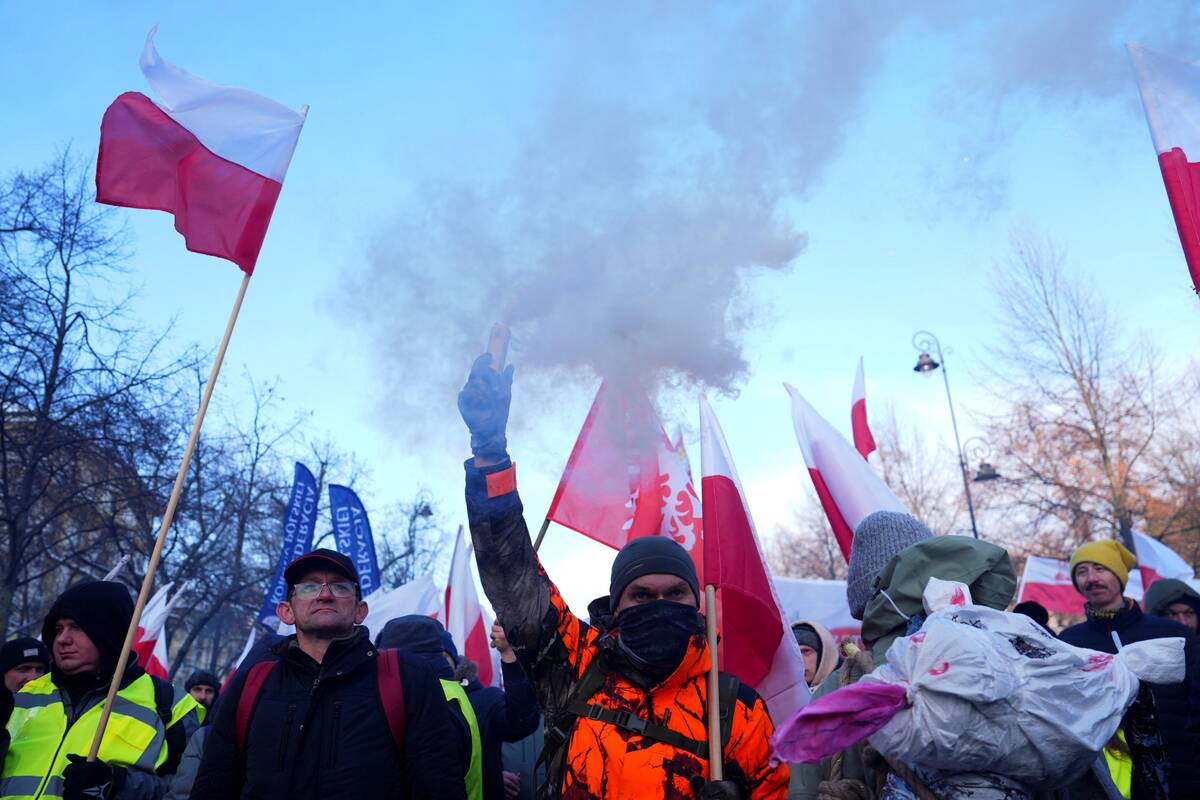
Farmers have launched protests across the EU, blocking French and Belgian highways and marching in Poland on Friday.
France voted against the deal – but at least 15 countries representing 65 per cent of the bloc’s total population voted in favour, enough for approval, EU sources and diplomats said.
An EU diplomat and Poland’s agriculture minister said that 21 countries supported the agreement, with Austria, France, Hungary, Ireland and Poland against and Belgium abstaining.
German Chancellor Friedrich Merz hailed Friday’s vote as a “milestone” and said the deal would be good for Germany and for Europe.
“But 25 years of negotiations is too long. It’s vital that the next free trade agreements are concluded swiftly,” he said in a statement.
EU capitals have been given until 5 p.m. Brussels time to provide written confirmation of their votes.
This would clear the way for Commission President Ursula von der Leyen to sign the agreement with Mercosur partners – Argentina, Brazil, Paraguay and Uruguay – in Asuncion, possibly next week.
The European Commission concluded negotiationson the deal a year ago. The European Parliament will also need to approve the accord before it can enter force.
France says battle isn’t over
The free trade agreement would be the European Union’s biggest in terms of tariff reduction, removing 4 billion euros (C$6.5 billion) of duties on its exports. The Mercosur countries have high tariffs, such as 35 per cent on car parts, 28 per cent on dairy products and 27 per cent on wines.
The EU and Mercosur will hope to expand evenly split goods trade worth 111 billion euros in 2024. EU exports are dominated by machinery, chemicals and transport equipment, and Mercosur’s are focused on agricultural products, minerals, pulp and paper.
To win over deal sceptics, the European Commission has put in place safeguards that can suspend imports of sensitive farm produce. It has strengthened import controls, notably regarding pesticide residues, established a crisis fund, accelerated support for farmers, and has pledged to cut import duties on fertilisers.
The concessions were not enough to win over Poland or France, but Italy shifted from a ‘no’ in December to a ‘yes’ on Friday.
French opposition parties look to topple government
“It seems to me the balance that has been found is sustainable,” Italian Prime Minister Giorgia Meloni told a press conference.
Mathilde Panot, lower house chief of the far-left France Unbowed party, said on X that France had been “humiliated” by Brussels and on the world stage.
French far-right and far-left parties are set to launch no-confidence motions in the government over the likely approval.
French Agriculture Minister Annie Genevard has said the battle is not over and has pledged to fight for a rejection by the EU assembly, where the vote could be tight. European environmental groups also oppose the accord, saying commodities shipped to Europe will often come from deforested land.
“The simple truth is that this unpopular deal is a disaster for the Amazon rainforest and no progressive MEP that is committed to forest protection should ever support it,” Greenpeace EU campaigner Lis Cunha said.
German Social Democrat Bernd Lange, the chair of parliament’s trade committee, expressed confidence that the deal would be passed, with a final vote most likely in April or May.
— Additional reporting by Charlotte Van Campenhout, Kuba Stezycki and Alan Charlish, Giselda Vagnoni