

Despite the fact that Canadian agricultural exports have quadrupled in size during the past two-and-a-half decades, our global market share has fallen by 12 per cent in the same time frame.
Nearly 60 per cent of our agri-food shipments still head south, so the recent U.S. political turmoil has exposed how risky this dependence is.
But there is good news as well.
Read Also

When hackers hit the barn
As Canadian farmers embrace automation, cybersecurity is the new front line. Here’s how to protect your on-farm data from digital threats.
The current situation has brought to light the need for Canada to diversify its agriculture and agri-food export portfolio and, according to many experts, there are emerging opportunities for our products.
“There are still untapped markets out there,” says Chuck Penner, founder and president of LeftField Commodity Research.
“Global markets are always expanding. There are always increased opportunities.”
In particular, the Indo-Pacific region — which represents half the global population and the world’s largest and fastest-growing agri-food market — represents significant opportunity for Canada.
According to a recent report from the Canadian Agri-food Policy Institute, Canada could capture tens of billions of dollars annually by ramping up trade to the area, which currently only takes about 24 per cent of our agri-food exports.
Penner, who has approximately 35 years’ experience in the grain trade sector, says opportunities such as these will be key.
“In a number of these regions of the world, there are uses that can be developed that don’t exist right now. We’re starting to see some of those markets develop through finding new uses. It’s hard to notice, because it’s not a million tonnes at one time, it’s more slow development.”
Another reason for optimism, according to experts, is that Canada has diversified its export markets many times in the past 50 years and we can do it again, if we are willing to learn from the past.
Malting barley
Fifty years ago, most of Canada’s barley ended up as livestock feed.
Then came a major shift, led in part by Dr. Bryan Harvey, a plant breeder who was working at the University of Saskatchewan in the late 1960s. He began a project “on the side” to develop a variety of two-row malting barley that was adapted for growth in Saskatchewan.
Harvey foresaw an opportunity for such a crop even though this wasn’t a priority for the breeding program at the time.
“I could see that the rest of the world, other than North America, was using two rows,” he says. “While we pretty much expanded as much as we could in the North American market, if we were going to expand beyond that market then the answer was going to be in two rows.”
With only a few outdated varieties available in Western Canada, Harvey and colleagues also focused on tailoring variety traits to the emerging needs of maltsters at the time, including high extract yield, uniform kernel size and low protein content.
As a result, the two-row Harrington malting barley variety was released in 1981 and changed everything.
Over the next 20 years, it would become the top malting barley variety grown in Western Canada at times representing approximately 60 per cent of barley acreage and the top export variety in demand by brewers globally.
Harvey credits the success of the variety with other global market factors at the time, including a global shortage of malting barley and rising demand from China, which went from importing almost none of the crop in the 1970s to more than 2 million tonnes annually by the late 1990s.
Brewing companies, including Molson (Canada’s biggest in the category at the time) were also jumping on board, he says.
“Molson in particular was beginning to use two rows. Then the other guys began to come along, then it just grew from there and completely switched around.”
All these factors helped propel Canada to its current position as one of the world’s leading producers and exporters of the crop, producing about 8.7 million tonnes of barley annually and exporting about 2.5 million tonnes a year.
Canola
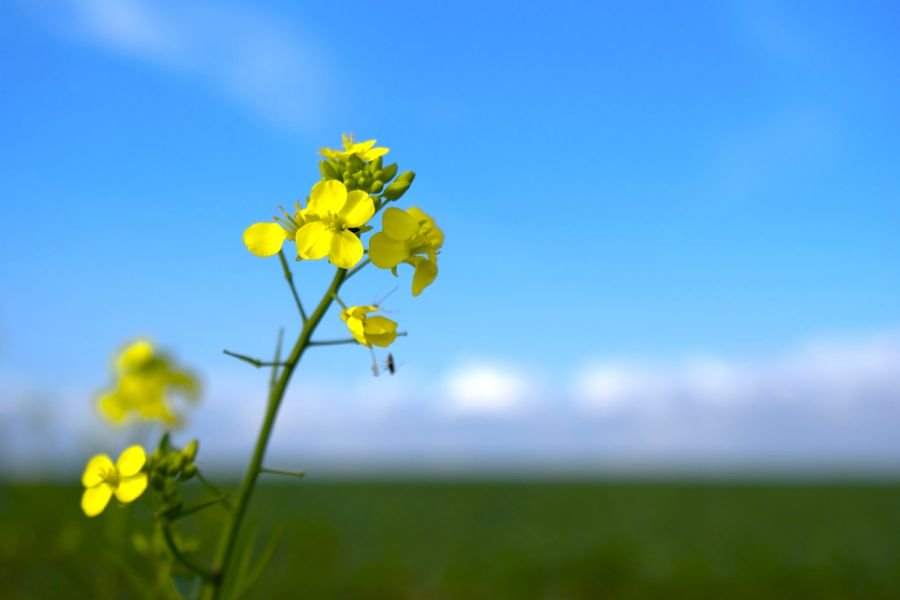
Today, Canada’s canola industry is worth about $44 billion. But in the early 1970s, it was non-existent.
How did this happen in just a few decades?
Again, this story begins with a story of plant breeding.
In the early 1970s, when Wilf Keller was just starting his career as a research scientist at Agriculture and Agri-food Canada, the Canadian agriculture industry was making efforts to diversify its exports beyond wheat.
At the same time, there was growing federal recognition that emerging scientific advances in plant cell and tissue culture could help develop new, value-added crops that might open up additional domestic and international markets, Keller says.
Crucially, he says the federal government mandated scientists to start exploring options for this technology and gave scientists the freedom to make their own discoveries.
“To their credit, in Ottawa in those days, they did not do a top-down thing. They said: ‘Go out and figure something out.’ So, they hired the biochemists.”
This led to breakthroughs in the 1960s and 1970s in plant cell and tissue culture, which allowed scientists like Keller to grow new canola plants from single cells and pollen.
By the mid-1970s, public researchers in Saskatoon and Ottawa used these advances to introduce genetic modifications that allowed farmers to control weeds more efficiently and produce higher yields, driving rapid growth in national canola production.
These genetic modifications also allowed for healthier oilseed varieties, laying the foundation for modern canola.
It was around 1975 when Keller himself became committed to the crop.
“I realized it was a big opportunity. There was enthusiasm in the room, because they were advancing it. They had converted rapeseed that was used during the Second World War into something that could be used in food and health.”
From there, Keller says the sector, including farmers, researchers and industry leaders, came together to push toward commercializing canola and building international markets.
“Everyone bought in,” says Keller, who continues to serve in leadership roles in the ag sector, adding that the momentum only grew from there.
“It was evident that this oil was good in terms of a cooking oil and as a potential margarine. By the very late ’70s and early ’80s, it started attracting the interests of small companies, boutique companies, that were looking for things to do.”
The industry support, farmer adoption and scientific advances all worked together to fuel a monster of an industry. Production and exports of the crop began to grow throughout the 1980s and by the 1990s, canola had become a major oilseed crop in Western Canada, with farmers producing about 9 million tonnes . By the end of the decade Canada had become a dominant global canola seed exporter.
Today, Canada produces approximately 19.5 million tonnes of the crop annually, and is the world’s largest exporter of canola seed, oil and meal, shipping to over 50 countries globally. The industry also creates approximately 206,000 jobs for Canadians.
Pulses
Thirty years ago, Canadian pulses were a niche. Today they represent a powerhouse industry, with Canada exporting approximately 5.5 million tonnes, worth more than $4 billion, to more than 100 countries globally.
At the same time, Canada is expanding its capacity to create value-added pulse-based products to meet growing global demand for plant-based protein and sustainably sourced crops. And according to experts, there’s still a lot of room to grow in this space.
For example, a recent report from Protein Industries Canada estimates there is $25 billion in untapped annual potential for Canada’s pulse and plant-ingredient sector. The report also points out that by nurturing the growth of this sector, Canada could quintuple the value of what it currently earns from commodity exports while also creating thousands of new jobs at home and strengthening its global position in sustainable food production.
However, the report also acknowledges that to achieve this potential would require significant amounts of strategic work, collaboration between the industry, government and research community, and investment, including the development of 10-15 new pulse processing plants in the country.
What we can learn from the past
Looking back over the past 50 years, it’s clear that diversification has been a foundational driver of Canada’s ability to become and remain one of the top agricultural exporters in the world.
It’s also clear that there are major opportunities on the horizon today.
To achieve these, many of the experts who witnessed Canada’s historic export diversification, or participated in it, believe that there are important lessons we can learn from the past.
For Keller, who has since been credited with helping shape Canada’s canola industry and advancing Canada’s global reputation for agricultural research and innovation, one of the most critical lessons is that diversification efforts are a long-term endeavour.
“It takes time to develop these things,” he says. “That time is something that our current political system does not seem to have patience for.”
He also believes that a major part of canola’s success story was the trust that was put in the research community to create the foundation for diversification strategies and the partnerships that formed between government, industry and scientists.
He believes that researchers today need to have the flexibility to innovate.
“I think you need to have less prescription coming out of Ottawa, more freedom at the ground level,” he says, adding researchers should have more ability to pivot when they see new opportunities.
Harvey agrees that it’s important to recognize that successful innovation sometimes requires failures. In fact, he believes a key part of being a plant breeder is expecting to fail.
“Any good breeder does not put all their eggs in one basket. They will try a number of things. And these days, I think people are open minded enough to recognize that you do need to try some of these things. Not everything works. All you need is one or two winners.”
Harvey also believes that the malting barley industry’s success was rooted in innovation but also in market intelligence, for example, the ability to foresee growing global demand for the crop, particularly from China.
Penner believes that being vigilant about watching global markets is an essential strategy for export diversification.
“One of the things that we try to do is look for small trends or developments happening that are clues about either challenges or opportunities in markets,” he says.
“Watching the trade data — and not just what Canada is exporting to these countries but what they might be importing from other countries to see if there are opportunities or challenges.”
He also believes that it will be important to ramp up work on market development and negotiating trade deals that benefit Canada.
“They don’t tend to make a huge splashy difference, but, bit by bit, those kinds of things solidify Canada’s position in those markets.”
And experts agree that in order to continue to be a key player in the agriculture and agri-food industry globally, Canada needs to recognize its limitations and play to its advantages.
“Because of our climate, we can’t compete on the amount produced per acre, that’s just too limited,” Harvey says. “If you’re going to compete in the global market, you have to do it on a quality basis. The emphasis has to be: ‘We can deliver better quality at a good price.’ And that’s basically what we’ve done.”
Penner agrees. “When you look at prices for peas in India, let’s say, Canadian peas are priced higher than Russian peas on a pretty consistent basis,” he says.
“Those kinds of things are critical to maintain. Even though we have to share the markets now with others, we can still get higher prices, based on our quality.”