

Wawanesa, Manitoba | Reuters — When farmer Simon Ellis first drove his combine into this year’s crop, he expected “catastrophic failure,” after a season of flooding followed by a long drought. But instead of shriveled kernels, plump seeds of wheat, oats and soybeans poured into his combine.
Ellis, 38, a fourth-generation farmer in Wawanesa, Manitoba, credits investments in pricey systems including minimum and zero-till farming which help protect soil; tile drainage, an underground system to prevent flooding; slow-release fertilizer pellets which are more effective, and advice from a professional agronomist on weedkillers.
“We are constantly making little tweaks,” he said. “That’s how we’re going to be able to keep fighting the changing climate.”
Read Also
Canola, U.S. soybean crushes expanding
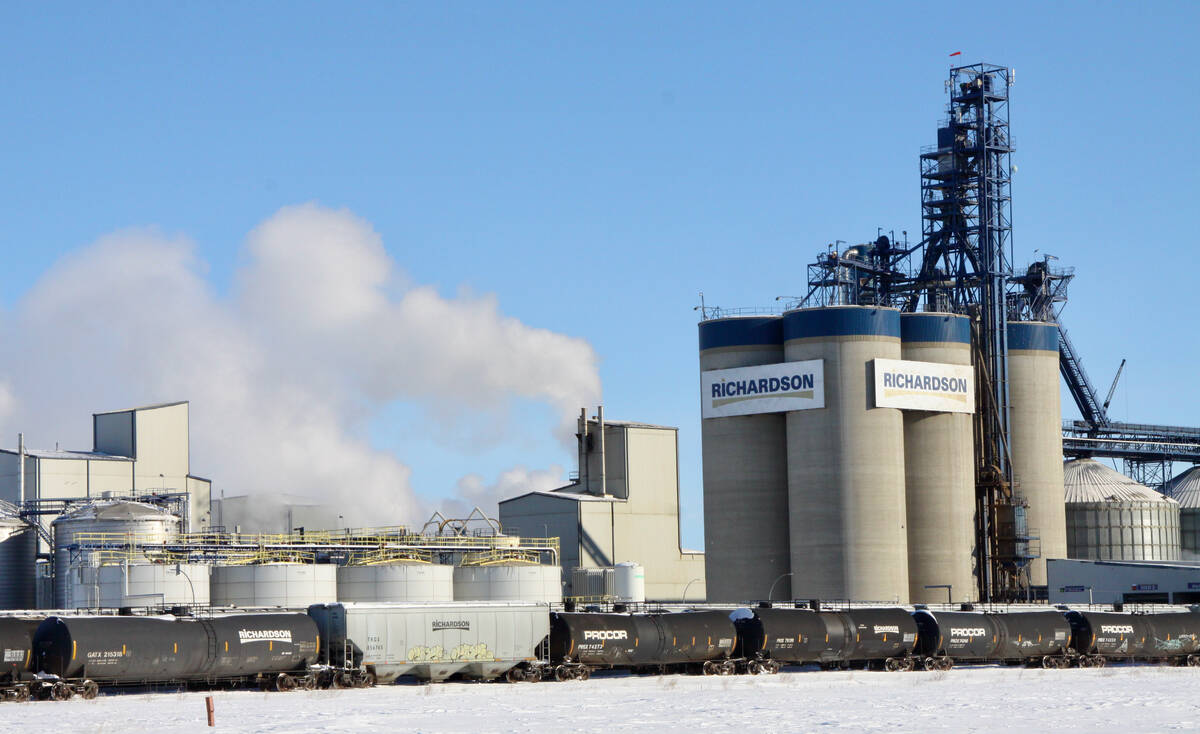
In calendar year 2025, the canola crushes in Canada and the United States remained above their respective five-year averages, Statistics Canada reported on March 13. While the U.S. soybean crush continued to expand, StatCan didn’t include any soybean crush data for 2025 due to confidentiality requirements under the Statistics Act.
Across much of western Canada, farmers like Ellis have been turning out strikingly better crops despite hotter and drier conditions — far above what farmers in the region could have expected in better conditions years ago, according to Canadian government data, thanks in part to widespread embrace of climate adaptation strategies.
While greater yields in Canada and elsewhere are depressing global prices for grains, they are keeping many farmers in business.
Record harvests despite drought
Adaptation practices – which tend to be costly and require cutting edge technologies – have enabled many farmers to ride out a drought that began in 2020.
Earlier this month, the Canadian government announced record harvests of spring wheat and canola for 2025. And because most of the grains produced in Canada are shipped and consumed abroad, those gains have major implications for the rest of the world’s ability to feed itself affordably.
Australia, another large global grain exporter, has also reported rising crop yields despite drier conditions.
This combination of methods and technology is not just helping Canadian growers keep up with climate change, but stay ahead of its ravages, according to interviews with 25 farmers, scientists and agriculture industry leaders, and a review of more than a dozen academic papers.
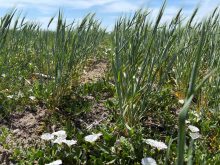
Spring wheat, used to make high-quality bread, yielded 58.8 bushels per acre this year, according to the government data release. That’s a gain of 77 per cent from 30 years ago, based on a three-year average. Canola yields nearly doubled, reaching 44.7 bushels per acre, also based on a 1994-1996 average.
While most climate science paints a bleak picture for global food supply, with a study in Nature this year forecasting up to 40 per cent reduction in North America’s wheat harvest by 2100, the agricultural experts Reuters interviewed said that with climate adaptation strategies the Prairies can continue to produce bigger and bigger crops in the future.
“Back in the day, 30, 35 bushels an acre (for wheat) would have been a bumper crop,” said Rob Saik, a Canadian agronomist who has consulted with governments all over the world. “Now it’s an abject failure.”
A notoriously difficult region
Even before climate change brought more unpredictable and extreme weather, western Canada was a notoriously difficult region to farm.
The central Prairies, a land of green and golden short grasses and thin, scrubby brush, get only about half as much rainfall as Iowa, and have a much shorter growing season. Climate change has made it even harder. Environment and Climate Change Canada says the country is warming at double the global average and that extreme events have become more common. On the Prairies, annual snowfall, a key source of spring moisture, has declined and summer extremes of rain and drought have increased, with rain often coming in enormous torrents, or not at all.
“Extreme events, like floods, heatwaves, wildfires, and severe storms, are increasingly damaging to our economy, ecosystems and built environment,” the federal department said in a 2024 report.
Incremental gains, not miracles
Scientists and agronomists say Canada’s gains don’t come from a single, dramatic factor, but from steady, incremental progress with farming methods and inputs.
Many seeds now come stacked with insect, disease and weed resistance, thanks to conventional breeding as well as genetic modification. Fertilizer application is designed to minimize disturbance to the soil surface by being placed at the same time as the seed goes in.
Fungicides, weedkillers and nutrients allow crops to outcompete their natural enemies.
Some of the strategies recall pre-industrial practices, such as intercropping, growing multiple crops at the same time.
Experts also credit automation such as self-guiding tractors that apply fertilizer at different rates based on soil tests and satellite mapping.
One family’s adaptation evolution
The Mowbray family ventured into adaptive practices four decades ago with tile drainage, laying a small stretch of perforated pipe designed to take the water down into the soil rather than spread it across the surface.
Over the last 12 years, Scott Mowbray, 46, has expanded the drainage system to about 800 acres of his land.
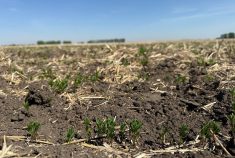
Meanwhile, the Mowbrays gradually took up minimum till. By 2010, the 2,000-acre farm was entirely no-till, leaving the soil unplowed and with stubble standing as a moisture trap and a barrier against the wind that otherwise carries the topsoil away.
The innovations allow the Mowbrays to “pull off yields twice what we used to with half as much rain,” Mowbray said, producing “incredible” volumes of spring wheat, peas and rye.
Technology’s steep price tag
Much of what has allowed Canadian farmers to deal with climate change involves expensive and complex equipment. A smart combine costs upwards of $1 million. A high-speed-data-enabled tractor and seeding drill cost around $2 million.
Kip Eideberg, senior vice president of government and industry relations for the Association of Equipment Manufacturers, which represents John Deere DE , Case New Holland CNH and other manufacturers, said precision systems have saved Canadian farmers nine per cent in herbicide and pesticides, six per cent in fuel, and four per cent in water use. That saves money for farmers operating on razor-thin margins, he said.
Most large-scale farmers have access to such technology in their tractors, combines, sprayers and management computers, Terry Griffin, a Kansas State University agricultural economist, said. But an older generation of farmers often doesn’t want to take on digital challenges, while younger farmers don’t have the money for machines or agronomic advice.
One obstacle to greater adoption is rural broadband access. Mowbray can’t count on being able to run a constant stream of data from his big farm machines. He can’t even call his farmhouse from his cellphone. His farm relies on two-way radios instead.
“It’s a simple thing but hugely important when you are in the field and might need a pick-up but can’t get a call through to the house,” he said.
Seed science – the invisible factor
Another equally important factor for farmers’ gains: breeding genetically superior crops that are hardier, drought-tolerant and produce bigger yields.
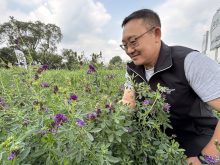
“We’re just starting down that path,” said Rick Mitzel, CEO of farmer-and-industry-funded mustard seed development organization Mustard 21. The company is developing drought-tolerant plants as an alternative to canola. The varieties “come out of the ground quicker, develop roots quicker, get leafing faster,” Mitzel told Reuters in an interview.
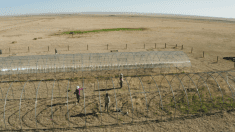
The farmer-controlled South East Research Farm in Redvers, Saskatchewan has been testing crops such as camelina, which is most likely to be planted in Canada for sustainable aviation fuel, that could offer farmers better yields and more resilience.
Executive director Lana Shaw doesn’t think climate change will happen without losses to the Canadian farm community. Some farmers will choose to not adapt and will simply retire. Some will adapt and fail. And some farmers will adapt and thrive.
“Under pressure,” she said, “they can adapt very fast.”