
Chicago | Reuters — U.S. soybean futures ended lower on Friday after trading higher earlier on expectations of continued export demand eating into already tight U.S. stocks.
Corn futures traded slightly lower as traders assessed mixed crop prospects in South America, while wheat ticked up slightly on fears of winterkill across the U.S. southern Plains as frigid weather set in.
Price movements were limited ahead of a U.S. Department of Agriculture supply and demand report next week that is likely to confirm tightening stocks of soybeans and corn.
Read Also

Bayer takes its multi-front battle on pesticide liability to Kansas
Kansas lawmakers were set to take up a bill on Tuesday backed by Bayer that would prevent people from suing pesticide manufacturers for not warning them that their products could cause cancer or other illnesses.
Despite trading near 6-1/2-year highs, soybeans could still rise further to curb demand, said Don Roose, president of U.S. Commodities.
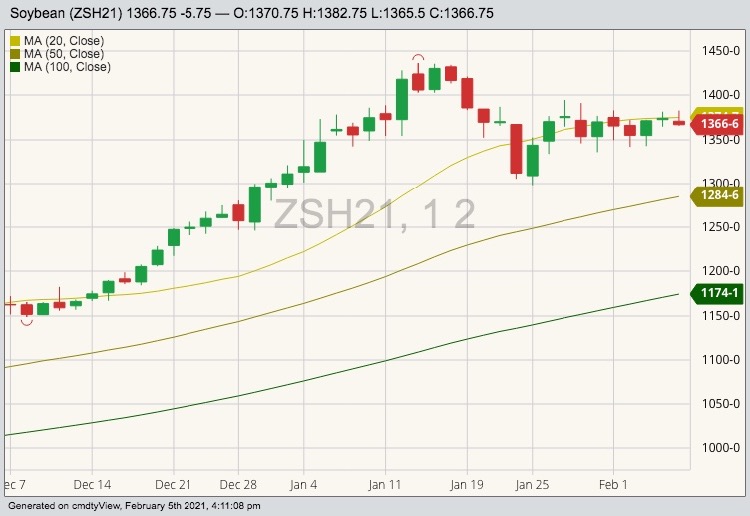
The most-active soybean futures on the Chicago Board of Trade ended 5-3/4 cents lower at $13.66-3/4 per bushel, dropping 0.2 per cent for the week (all figures US$).
CBOT corn fell 1-1/2 cents to $5.48-1/2 per bushel, ending the week 0.2 per cent lower, while wheat added 3-3/4 cents to $6.41-1/4 per bushel, a 3.28 per cent drop for the week.
Soybeans improved midday, but ended lower as traders positioned ahead of next Tuesday’s USDA report, expected to show further supply tightening.
“We’ve been quiet on the export front for a couple days, but people are thinking China will buy ahead of their New Year’s holiday,” said Joe Davis, director of commodity sales at Futures International.
The U.S. exported $28.75 billion of agricultural goods and related products to China, the world’s biggest soybean importer, in 2020, according to USDA data, missing the $36.5 billion targeted under the Phase One trade deal.
CBOT corn was little changed, though USDA reported daily export sales of 101,600 tonnes for delivery to unknown destinations during the 2020-21 marketing year.
Meanwhile, rain slowed Brazil’s soybean harvest and subsequent second corn crop planting, but forecasters still expect bumper crops.
In Argentina, the Buenos Aires Grains Exchange on Thursday cut its 2020-21 corn crop forecast by one million tonnes to 46 million tonnes, citing lower-than-expected yields caused by dry weather.
— Reporting for Reuters by Christopher Walljasper in Chicago; additional reporting by Gus Trompiz in Paris and Colin Packham in Canberra.