

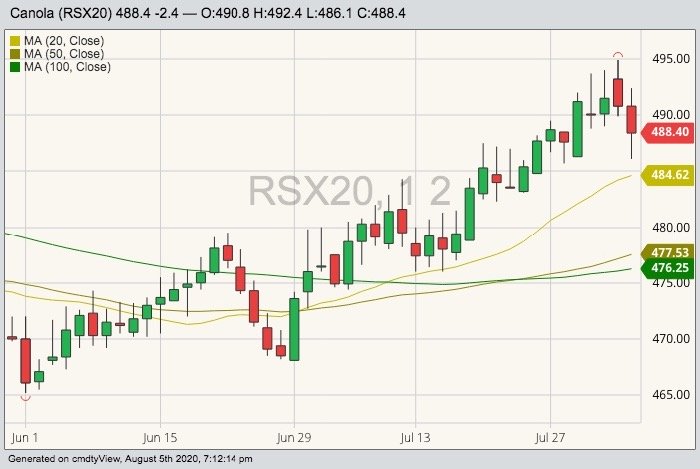
MarketsFarm — As the Canadian dollar continues its rise, the adverse effects on canola could become more pronounced, according to Errol Anderson of ProMarket Communications in Calgary.
Anderson’s expectations are for the loonie to hit a range of 75-77 U.S. cents, which could see canola drop $5-$10 per tonne.
“The loonie, even though our economy is in bad shape, is going up by ‘osmosis,'” he said, explaining it has far more to do with the decline in the U.S. dollar.
Read Also
Pulse Weekly: War, weather affecting Manitoba pulse prospects
Manitoba pulses could be affected by the ongoing war in Iran as well as spring weather, said the former executive director of Manitoba Pulse & Soybean Growers.
“There’s a move away from the U.S. dollar as the global currency reserve,” Anderson said, noting silver and gold have risen sharply in recent weeks. Gold on Wednesday shot past US$2,000 per ounce for the first time.
The U.S. dollar index, which pits the greenback against six major world currencies, had the U.S. currency below 93.0 as of midday on Wednesday, slipping from about 100.0 at the beginning of summer.
“It’s bothering canola,” Anderson said.
Also, the yield potential for U.S. soybeans poses another challenge to canola futures, he said. Market expectations have pegged record yields of about 54 bushels per acre, and corn could surpass 184 bu./ac.
However, dry conditions in the U.S. are threatening those big yields unless there is rain in the near future.
“Canola is really on its own,” Anderson said.
One factor that helped to support the rise in the canola over the last few weeks has been flooding in southern China, he added. The high water has impeded important shipping lanes, and in turn pushed up prices for edible oils.
Anderson cautioned that floods are only temporary, and the effects of that bump will wear off.
— Glen Hallick reports for MarketsFarm from Winnipeg.