
A rise in both revenue and carloads in Canadian Pacific Railway’s grain sector helped offset a drop in overall freight revenue for the company’s second quarter (Q2).
CPR on Thursday posted net income of $157.3 million on $1.02 billion in total revenues in its Q2 ending June 30, up slightly from a profit of $154.7 million on a much higher $1.22 billion in revenue in the year-earlier period.
The impact on CPR’s net income from the drop in freight volumes was offset by a net gain after tax from the sale of a portion of CPR’s interest in the Detroit River Tunnel Partnership, worth $69 million, the company said.
Read Also
CBOT Weekly: Gains in commodities amidst Iran conflict differ from Ukraine war
To analyst Tom Lilja of Progressive Ag in Fargo, N.D., there’s a difference in the commodity markets currently with the Middle East war and four years ago when Russia invaded Ukraine.
CPR also saw its total Q2 fuel bill drop by more than half, to $117.7 million.
"The recession continues to have a significant impact on our business and although freight volumes appear to have stabilized, we have not yet seen a sustained recovery in traffic," CPR CEO Fred Green said in Thursday’s release.
The railway also posted a technical uptick in revenue as it’s now fully consolidated the results from the Dakota, Minnesota + Eastern Railroad (DM+E), which it bought in October 2007.
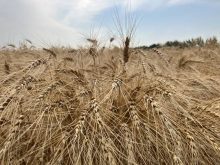
CPR’s lower freight revenues overall weren’t for lack of grain traffic, as the company posted $272.7 million in grain revenue for the quarter, up from $228 million in the year-earlier period.
That revenue comes from a total handle of about 119,300 carloads of grain (up from 110,200), for per-carload revenue of $2,286 (up from $2,069).
CPR’s revenue in its fertilizer and sulphur sector, meanwhile, was down substantially in its Q2 at $65 million, compared to $140.7 million in the year-earlier period.
The railway moved about 22,300 carloads of sulphur and fertilizer in Q2, well down from 54,800 in the year-earlier period. Freight revenue per carload for that sector, however, was up at $2,915, compared to $2,568 in the year-earlier Q2.